Canadian Streetcar Systems- Toronto
Toronto
Began Operation: 1861
Route Miles: 57
Stops: Many
Org: Transit Agency
Schedule: Daily
Photo: John Smatlak
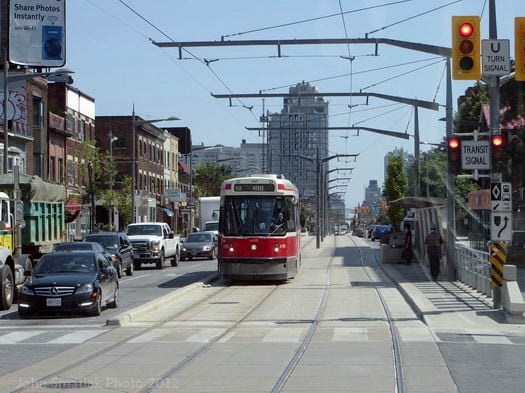
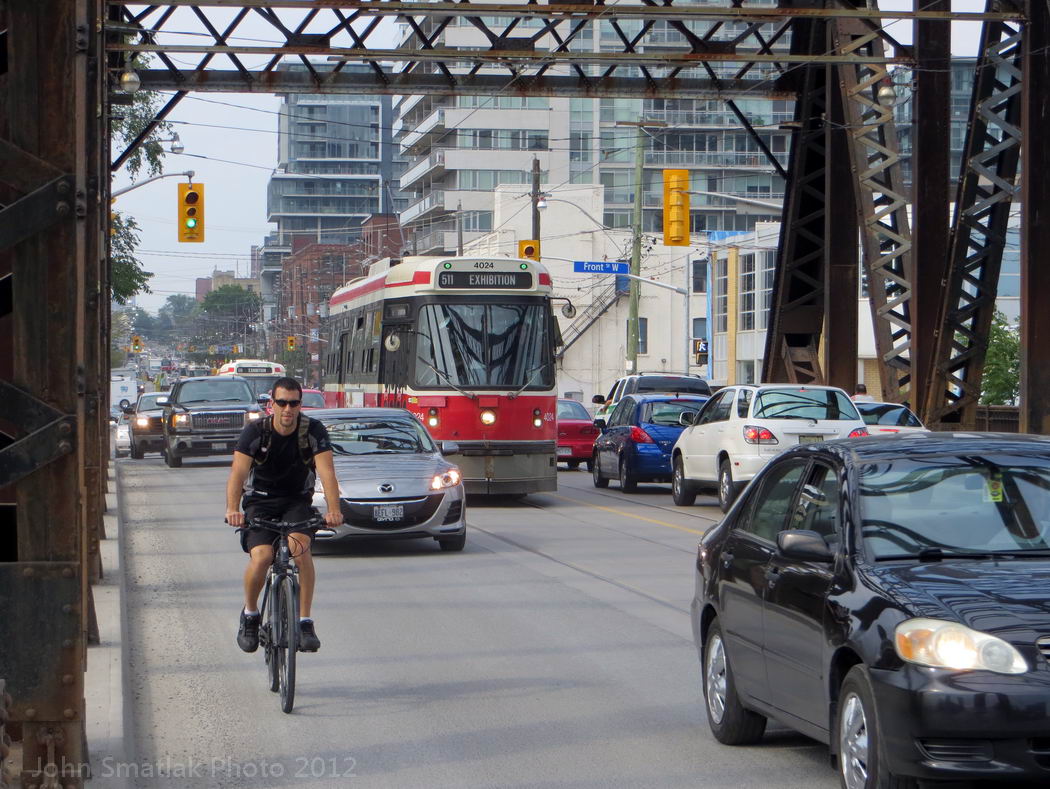
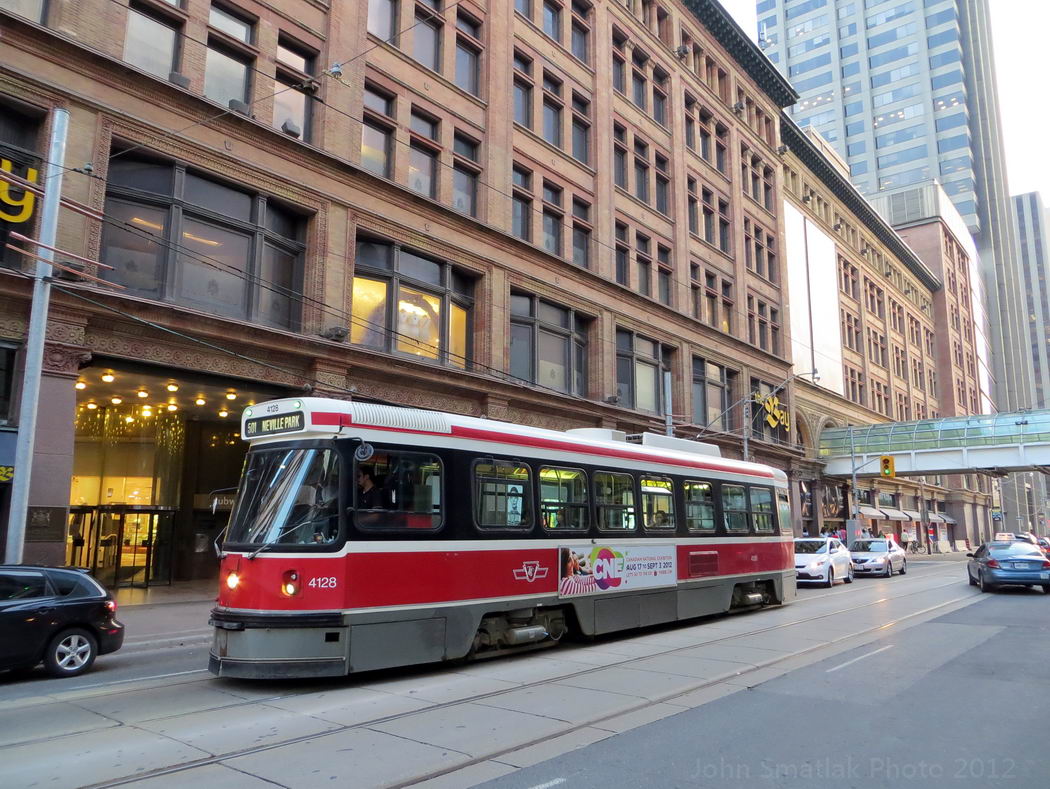
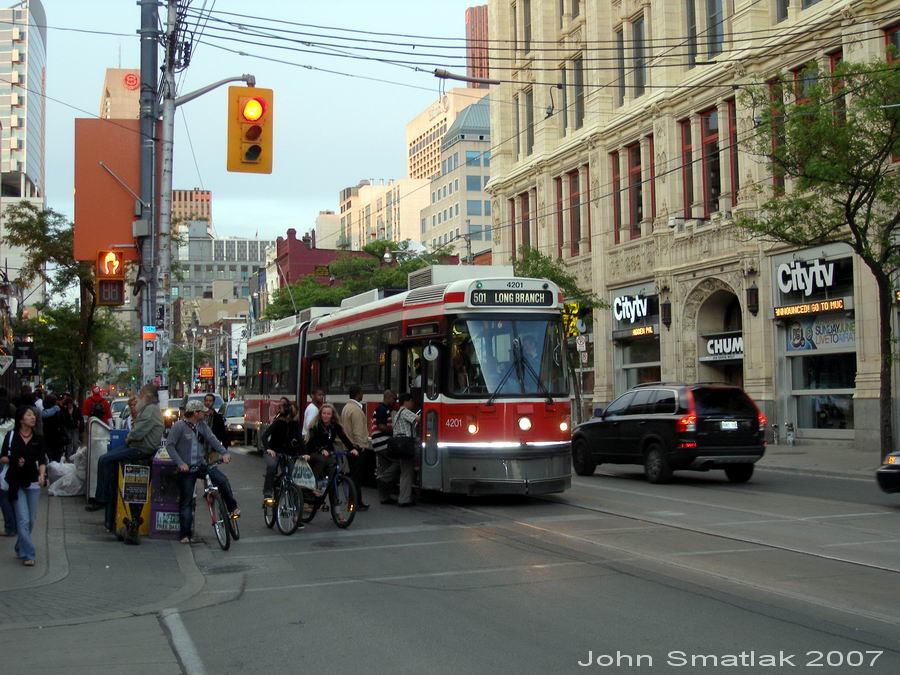
Toronto, Canada is home to North America’s largest streetcar system. Toronto is one of the “legacy” systems that bucked the trend of other US and Canadian cities, and retained an extensive streetcar network. In 1989 they began expanding the streetcar system, a process which has continued into the present day. The system is well covered on other websites, but we’ve included a basic introduction here to encourage you to learn more.
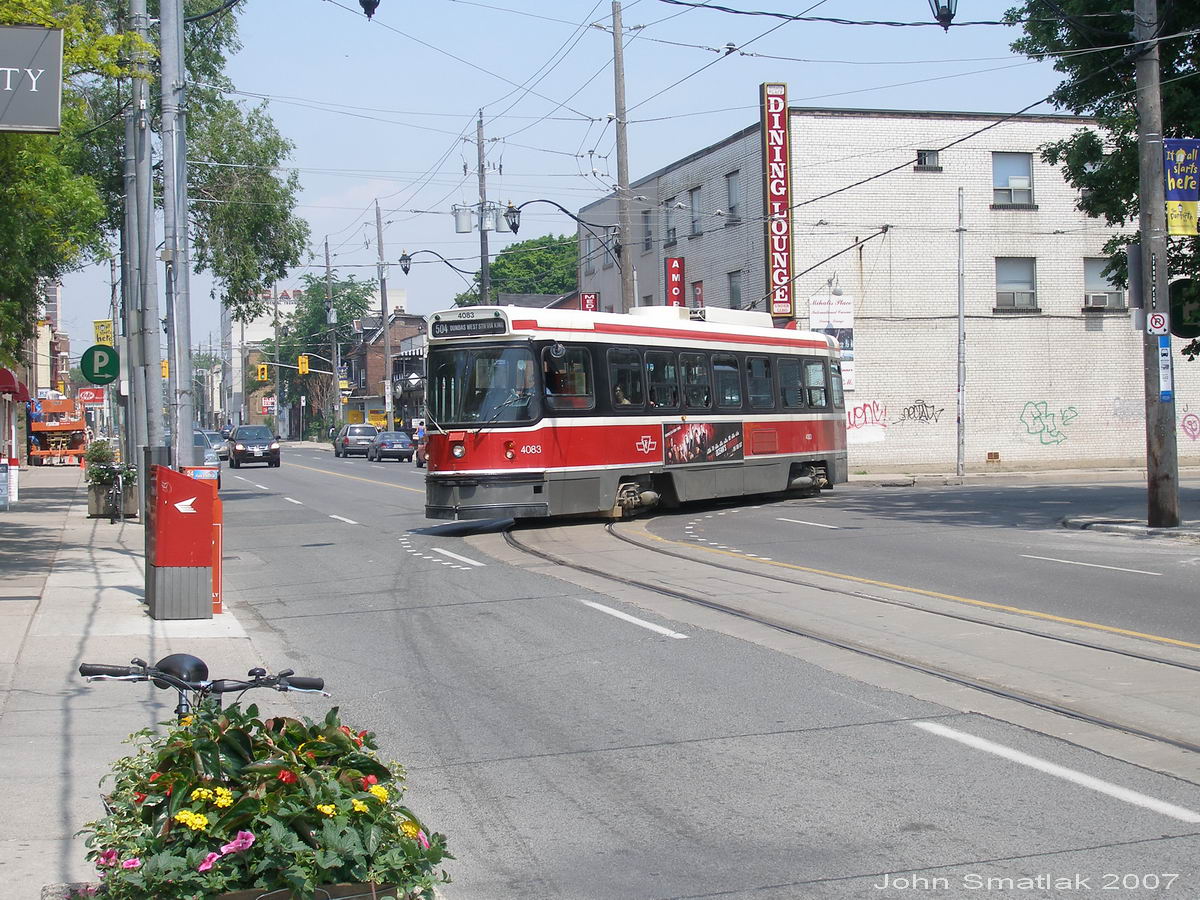
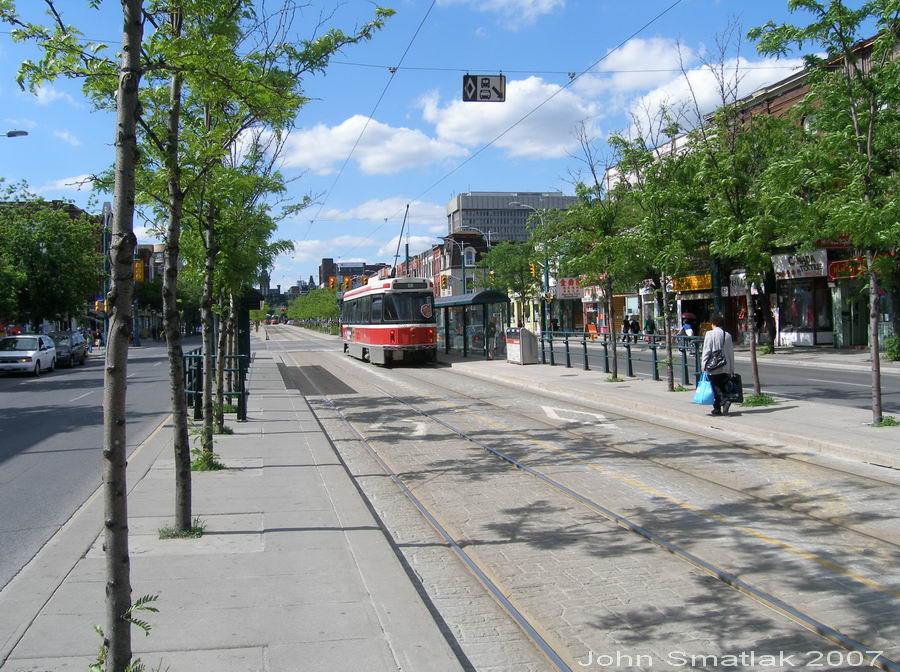
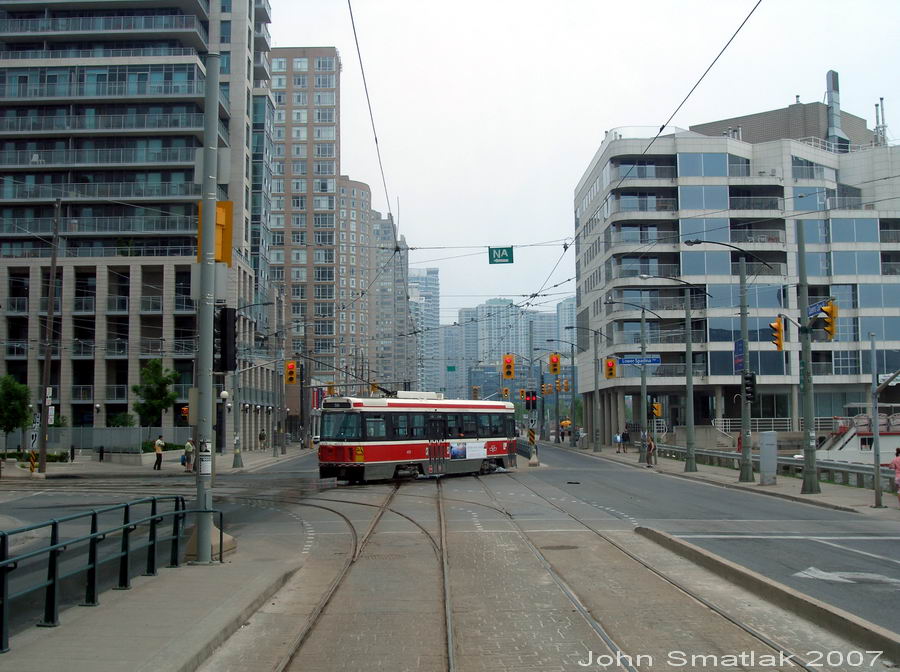
The system is operated by the Toronto Transit Commission, a public entity that assumed operation of the city’s transit services beginning in 1921, taking over from the existing municipal and private operators. As of 2008, the system included 139 bus routes, 11 streetcar routes, 3 subway lines and one rapid transit line. Streetcars serve on some of the heaviest surface routes, using a mix of dedicated rights-of-way and traditional mixed traffic running (with efforts underway to increase the amount of dedicated rights-of-way). TTC is also undergoing a major expansion, with the addition of light rail service as part of the “Transit City” plan.
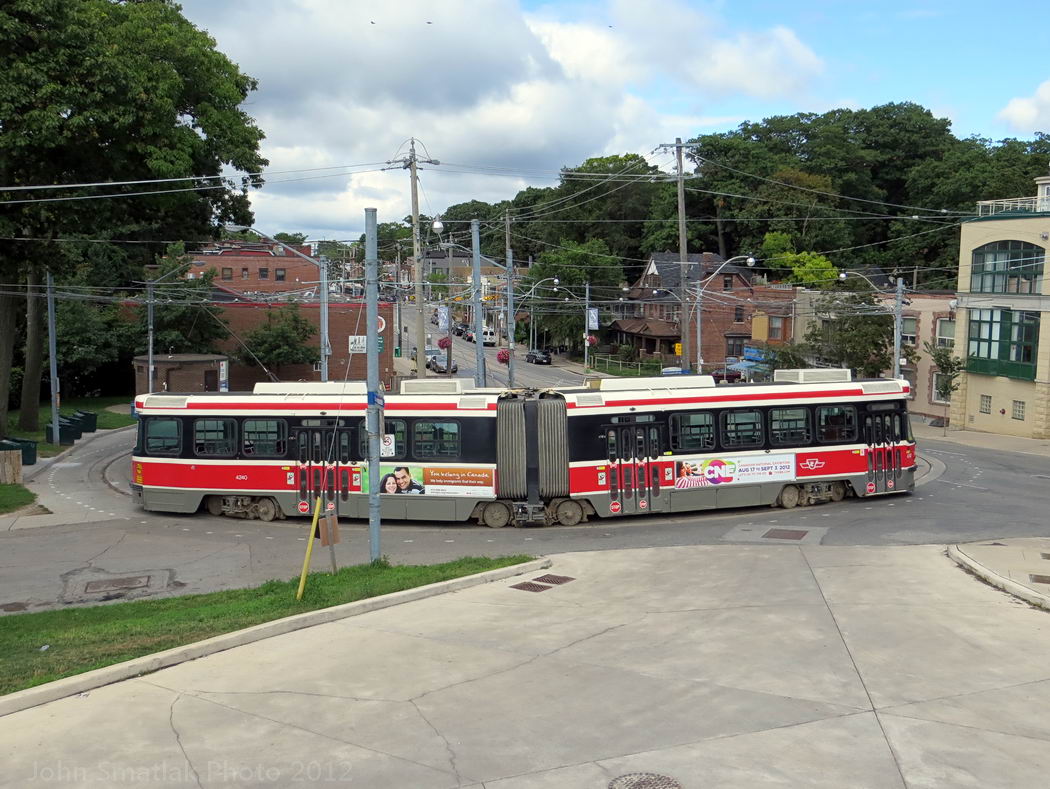
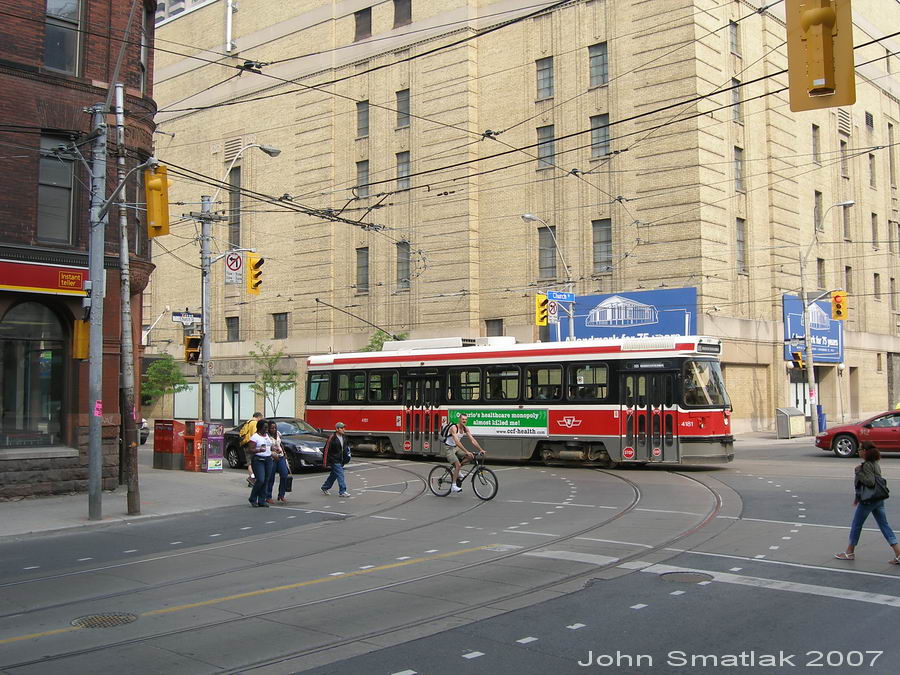
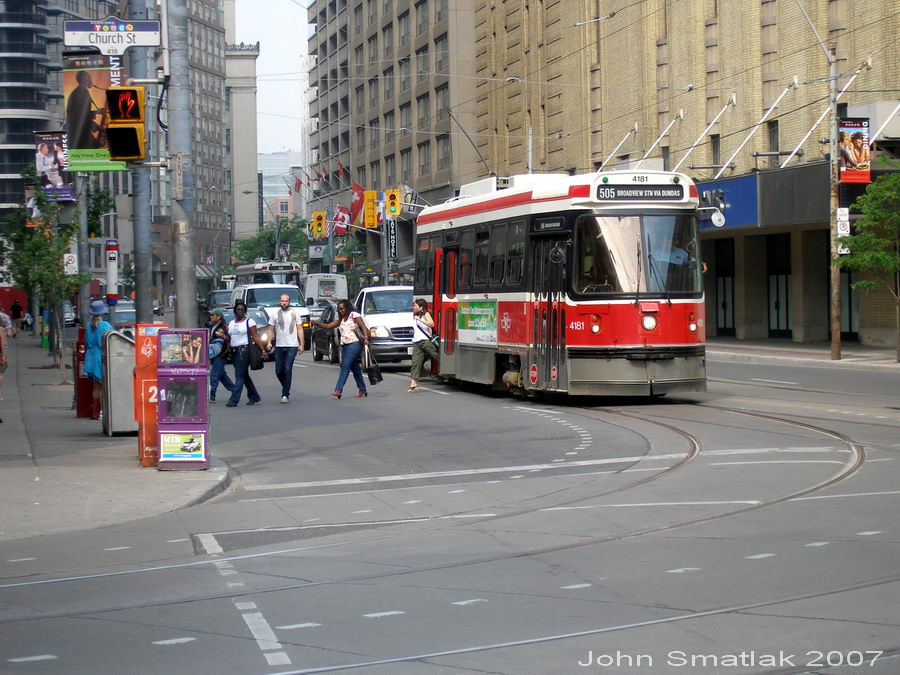
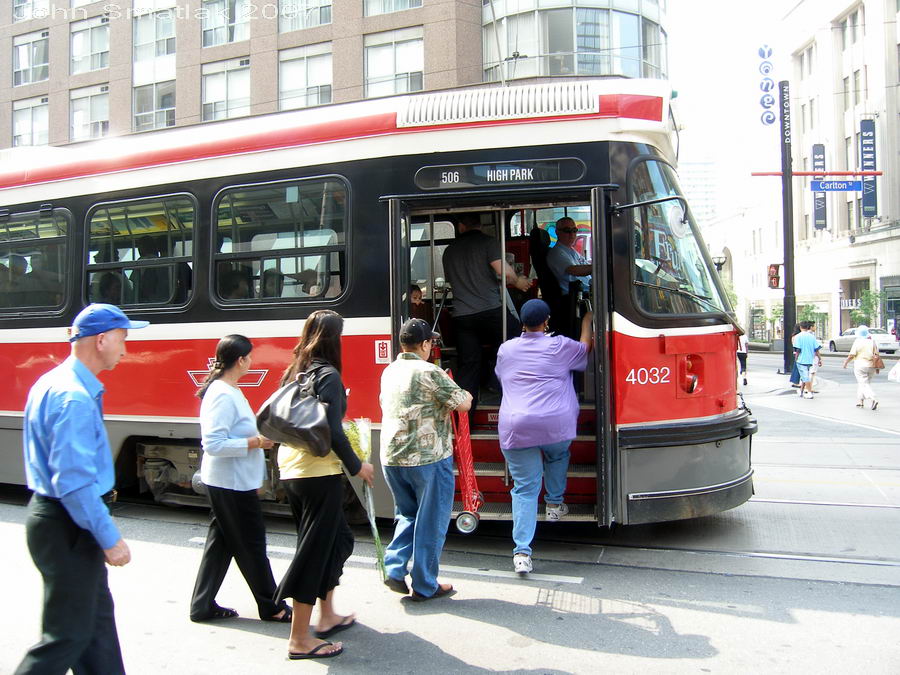
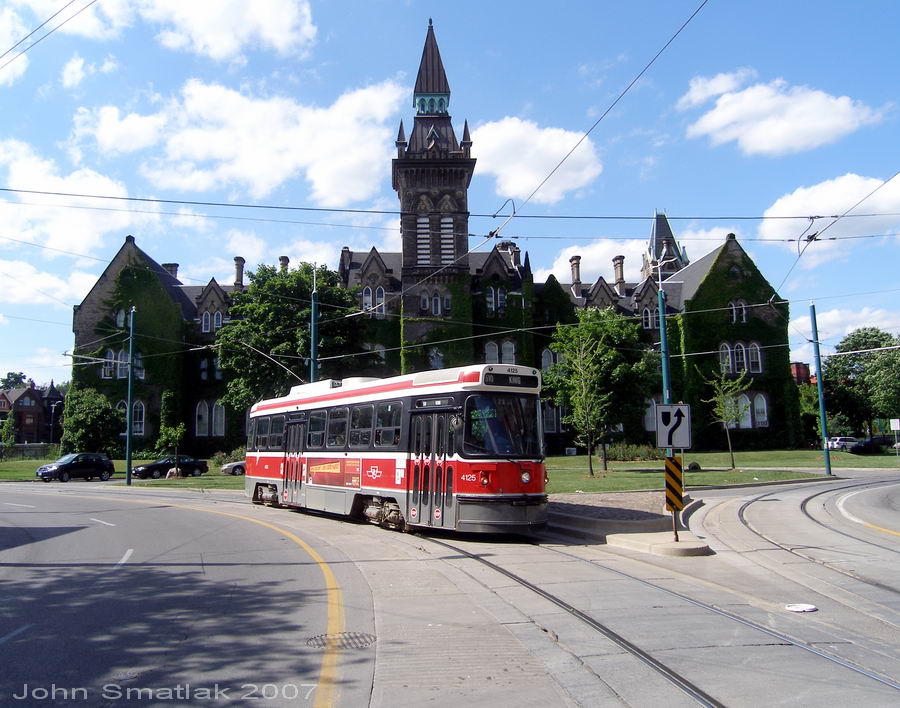
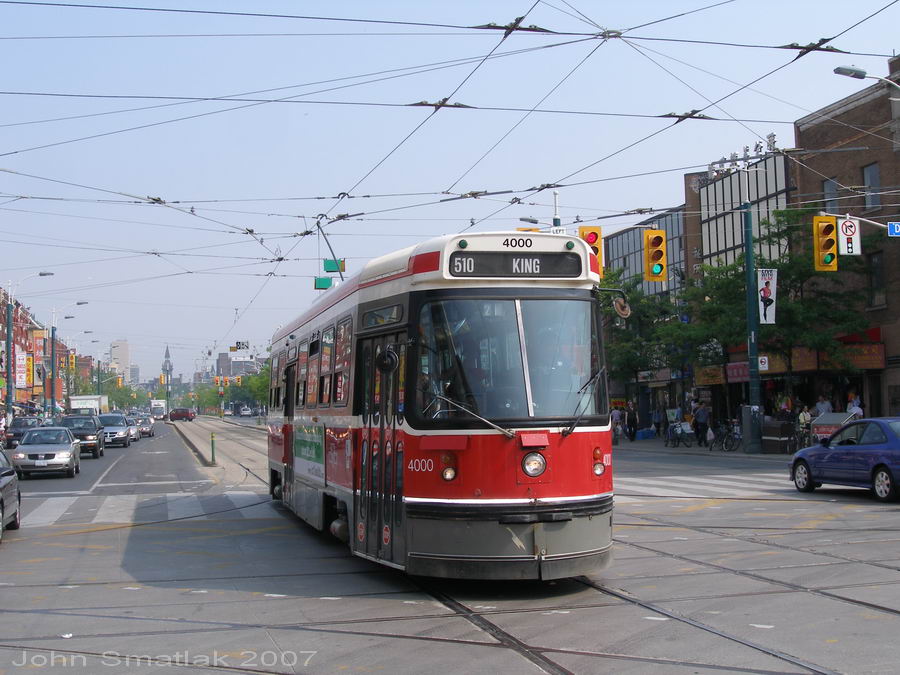
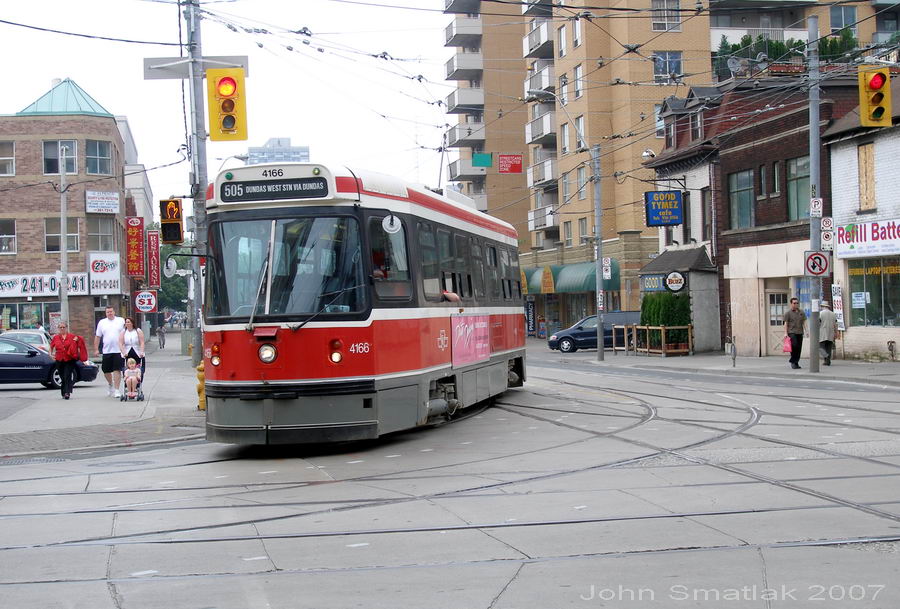
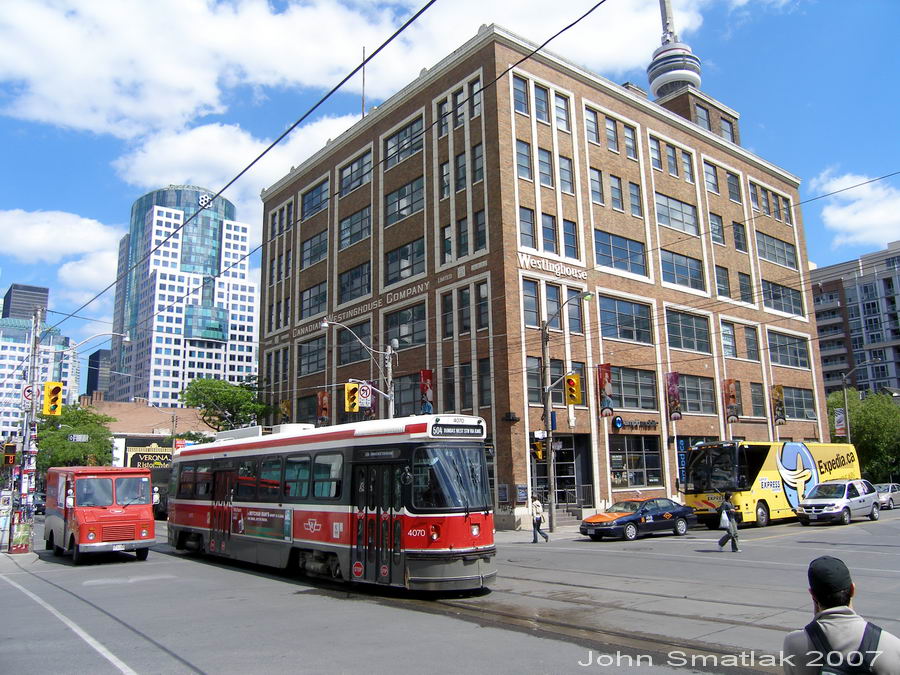
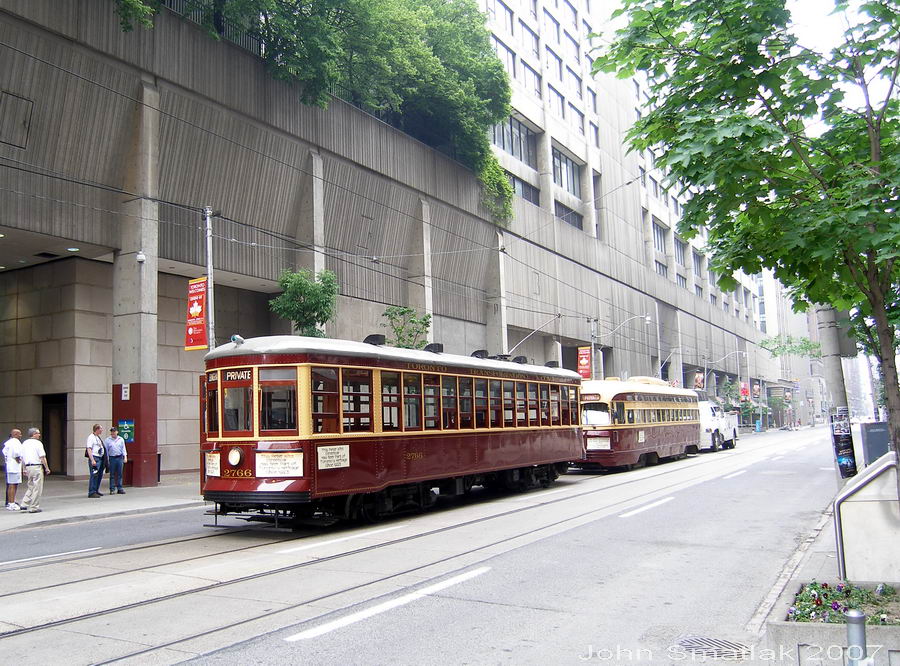
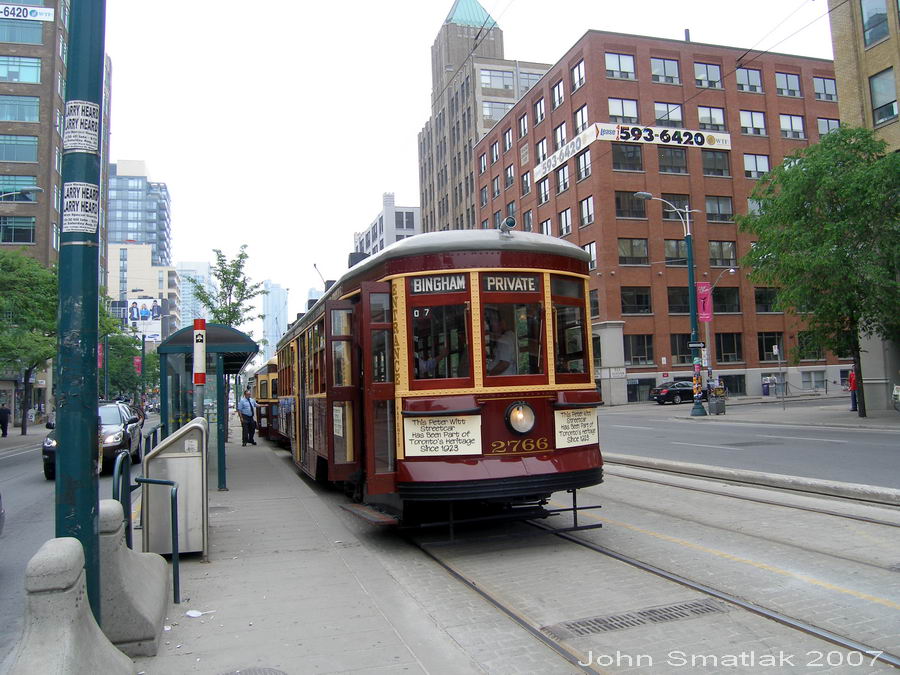
Streetcar service is provided with a fleet of 248 vehicles built between 1978 and 1984. The 196 single-unit “Canadian LRVs” (CLRV) replaced the predecessor PCC streetcar which had served for more than forty years. The 52 “Articulated LRVs” (ALRVs) are a substantially larger vehicle but are built along the same basic concepts and equipment. Toronto also retains three heritage trolleys, two PCCs and a 1921 “Peter Witt” style car. System operating voltage is 600V DC, and like Philadelphia in the United States, Toronto continues to use trolley poles for current collection. All streetcar track is broad gauge 4 feet 10-7/8 inches.
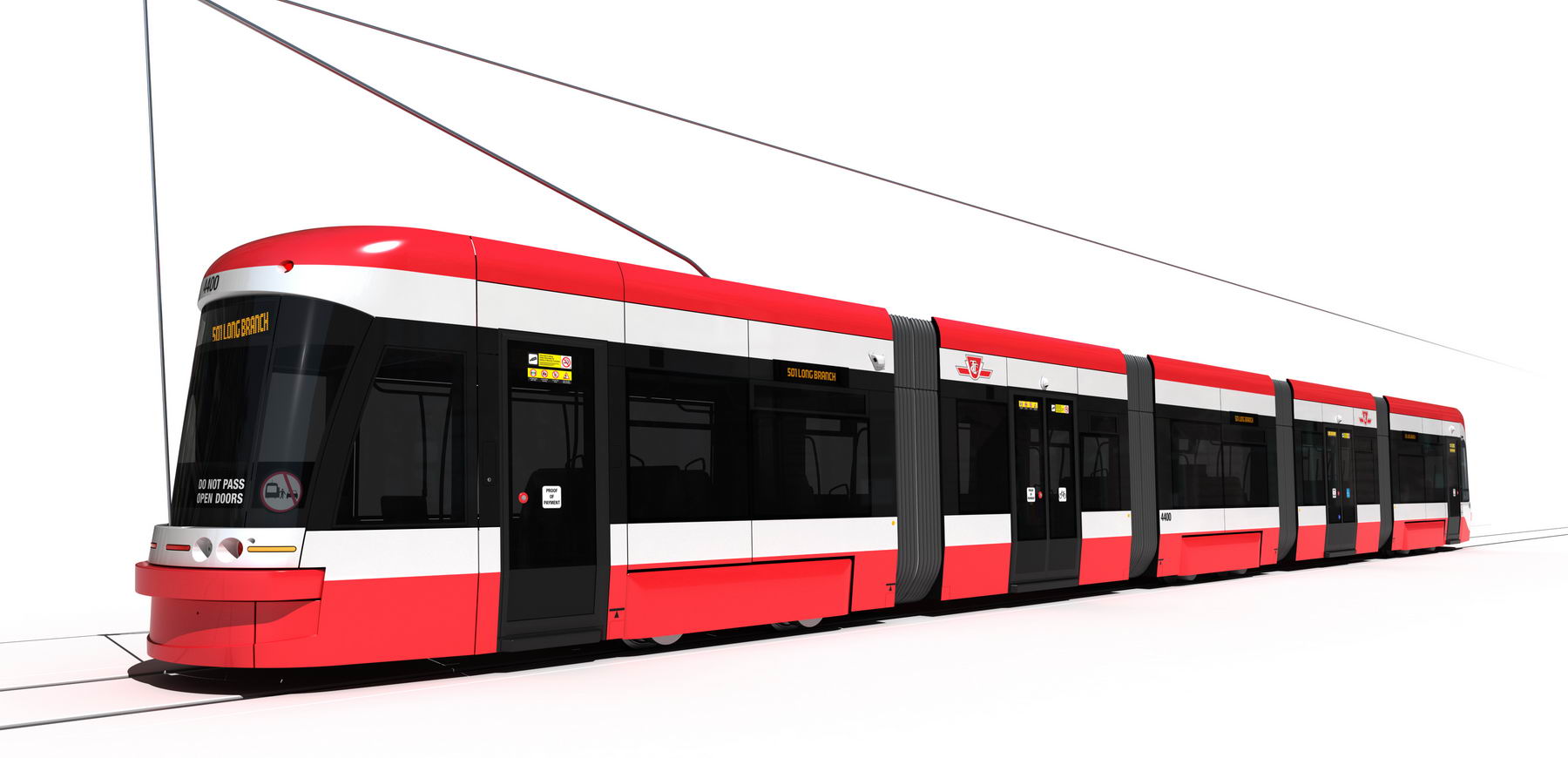
TTC is now in the process of procuring a large new fleet of modern, accessible streetcars to replace the vast majority of its existing fleet. 204 new 100% low-floor cars will begin arriving in 2012, supplied by Bombardier Transportation. A rendering of the new vehicle appears below. Click here for more information on the new fleet.

 |
 |
 |
 |
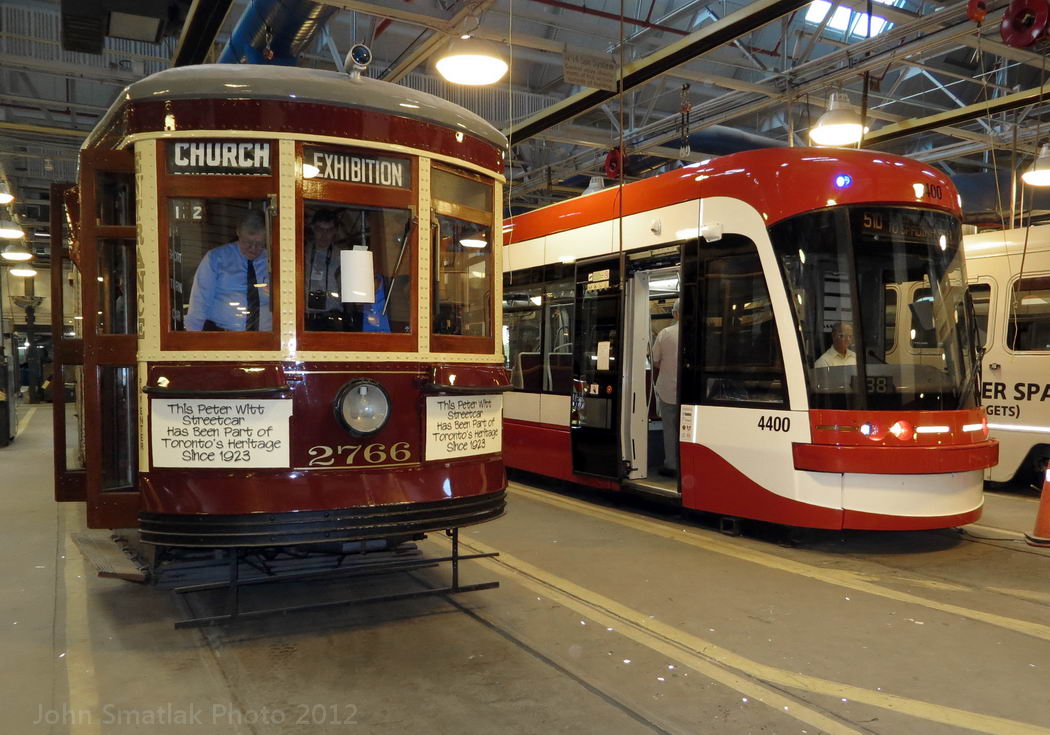
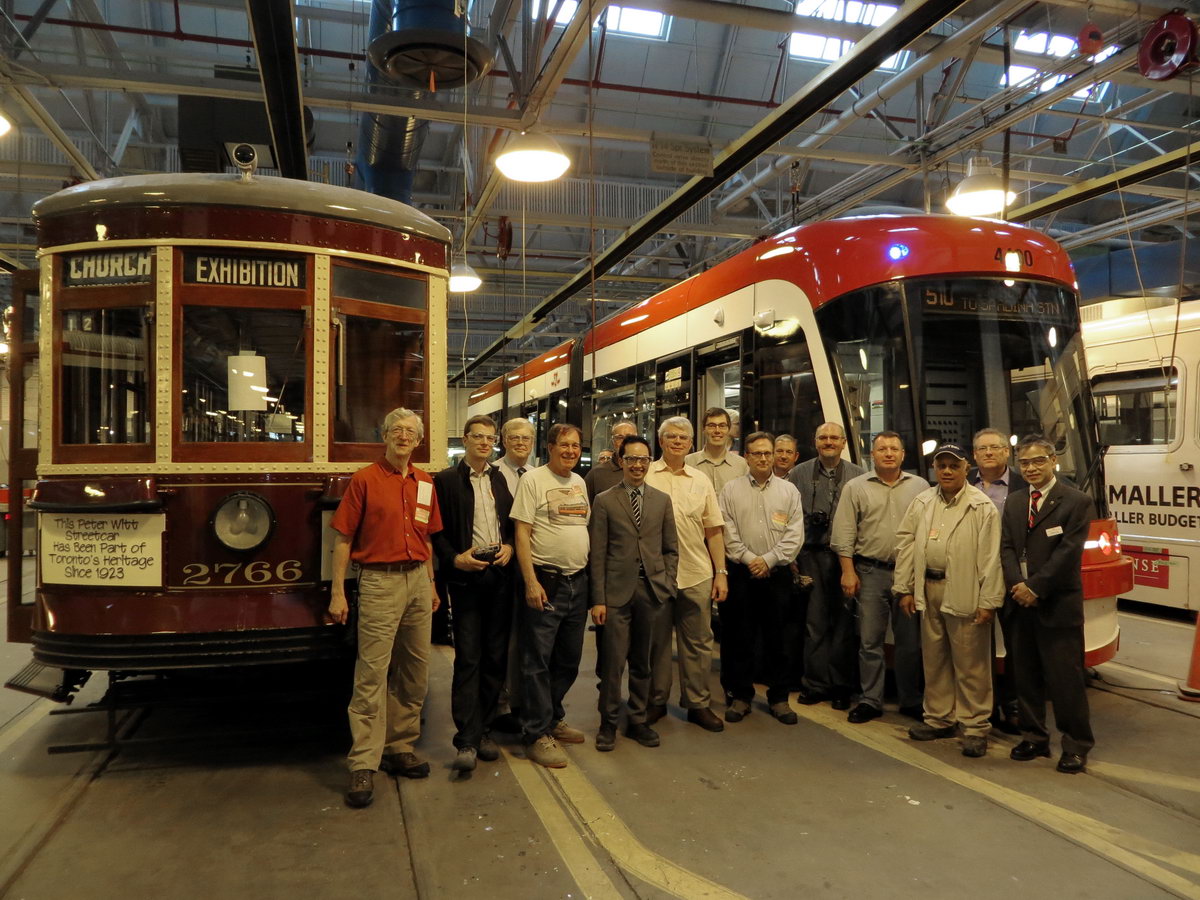
| August 2012- the APTA Streetcar Subcommittee visits Harvey Shops, with the 1921 heritage car and the mockup for the new low-floor fleet. |
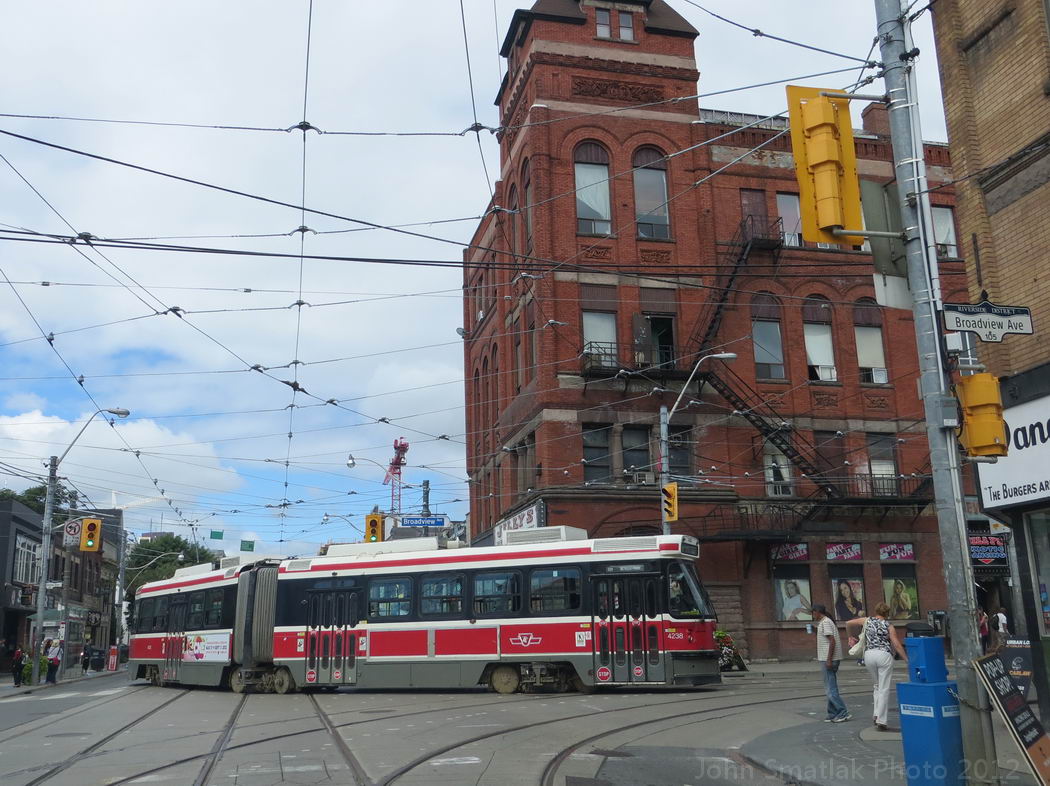
An ALRV turning onto Broadview |
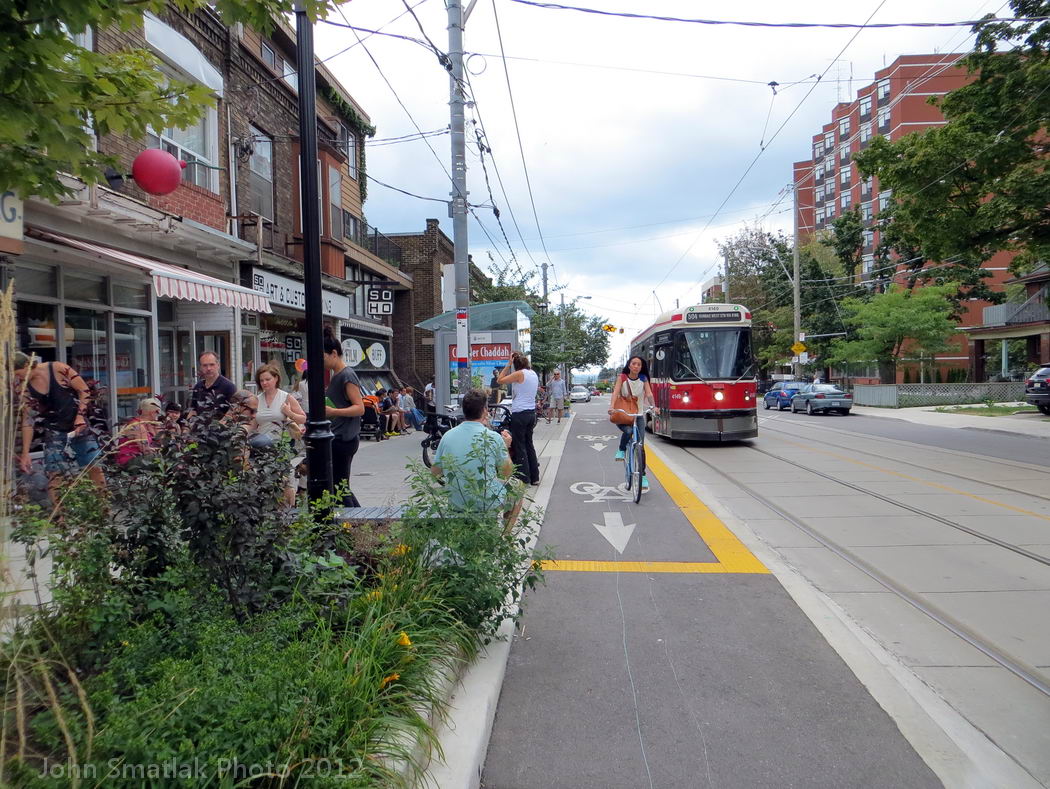
The Roncesvalles line is being upgraded with “bulb-out” platforms that share space with the bike path |
|
 |
 |
 |
 |
|
Classic |
Cyclists, |
||
 |
 |
 |
 |
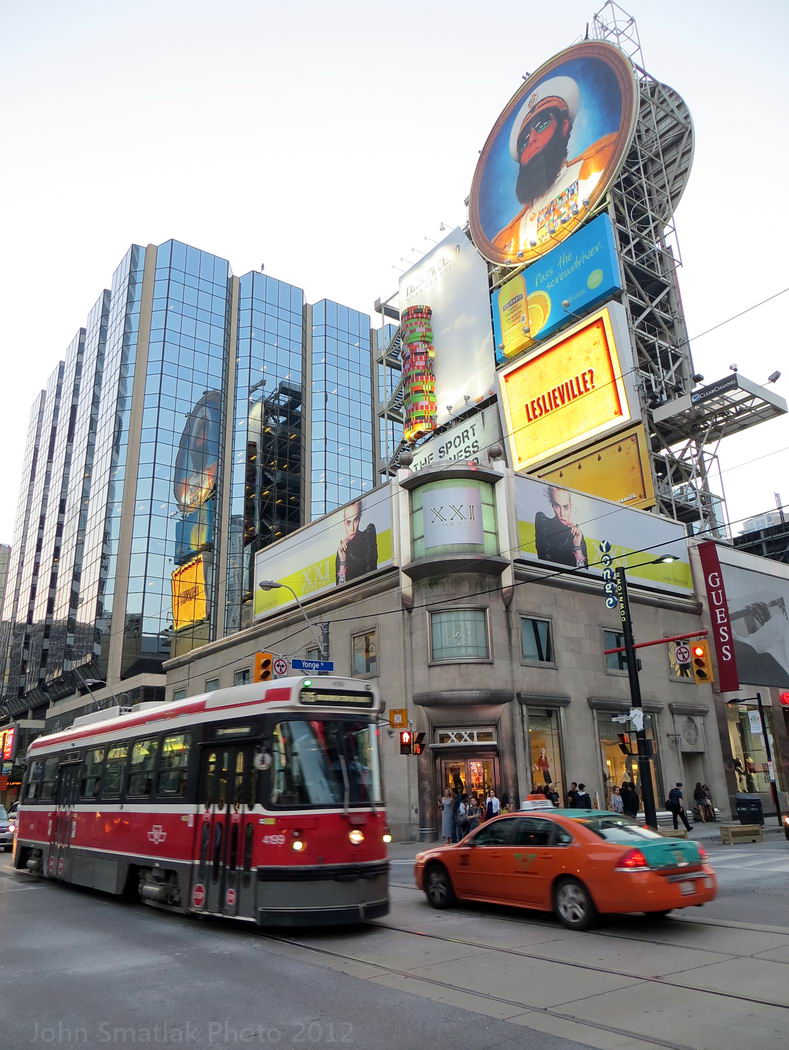
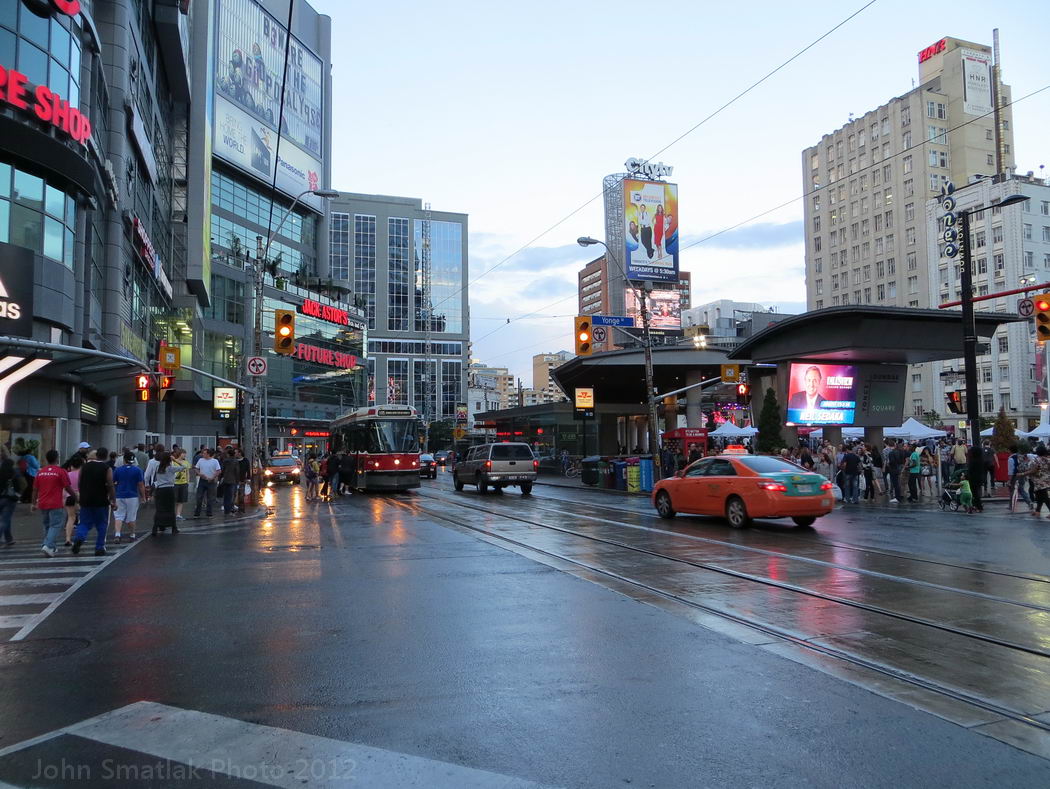
| On Queen at Yonge |
Single-ended |
Pulling |
|
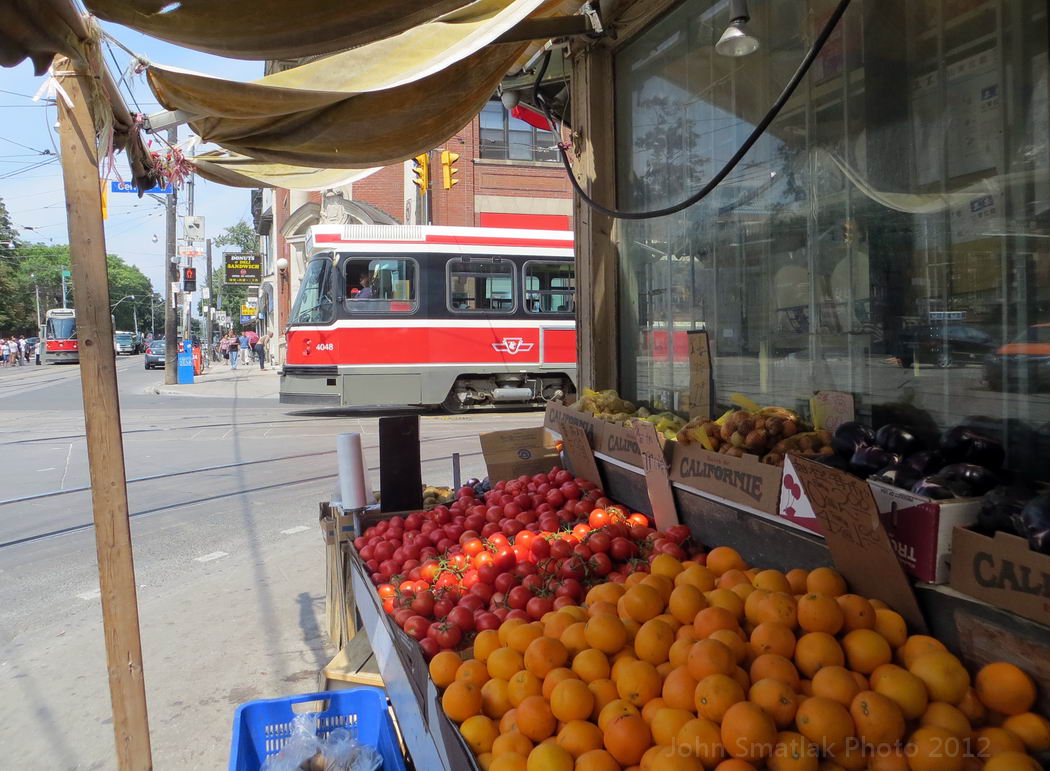 |
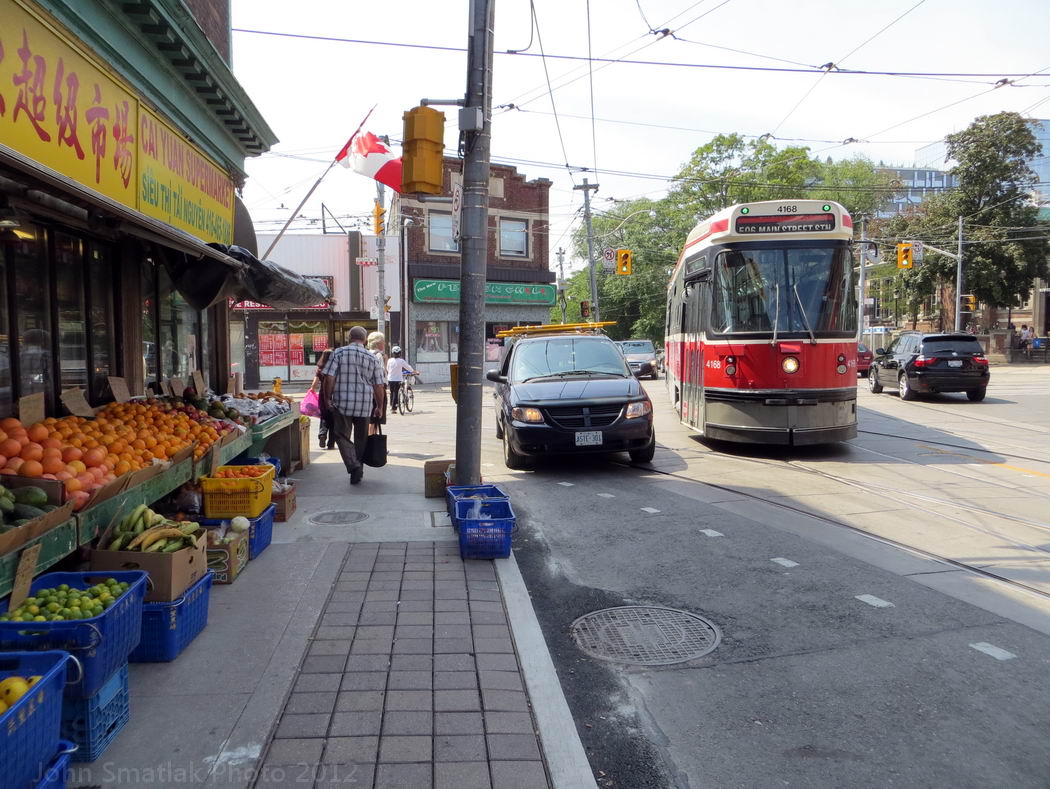 |
 |
 |
|
Streetcars |
Downtown |
||
 |
 |
 |
 |
|
The |
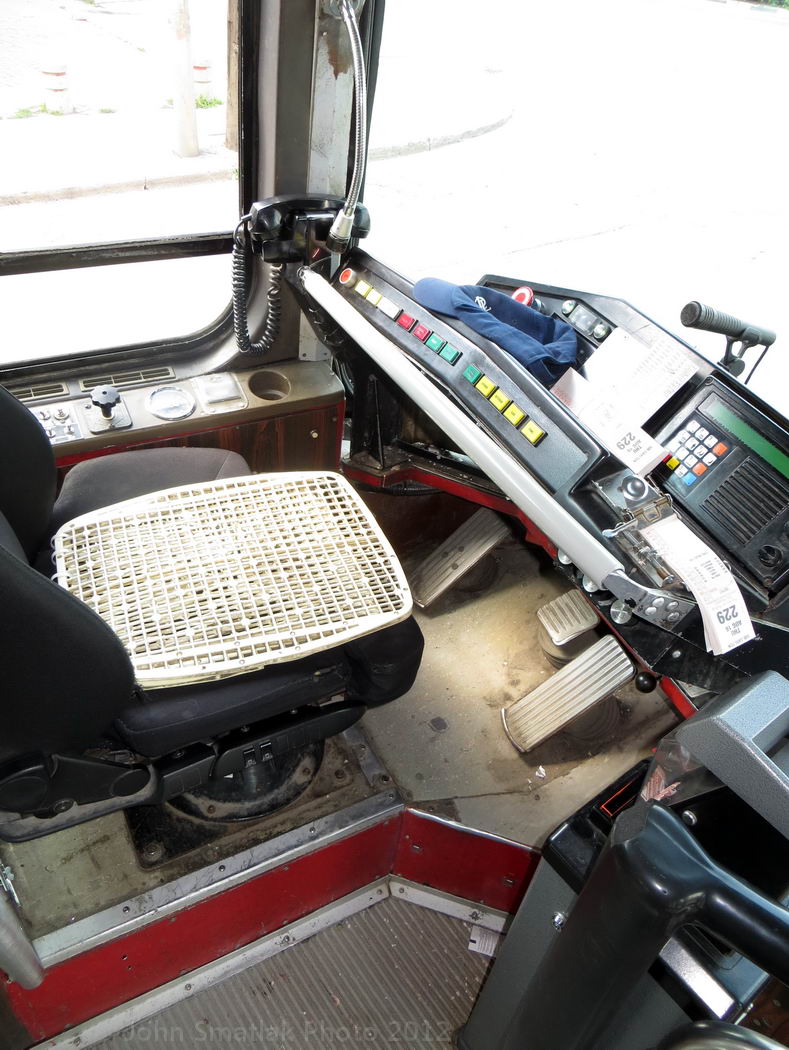
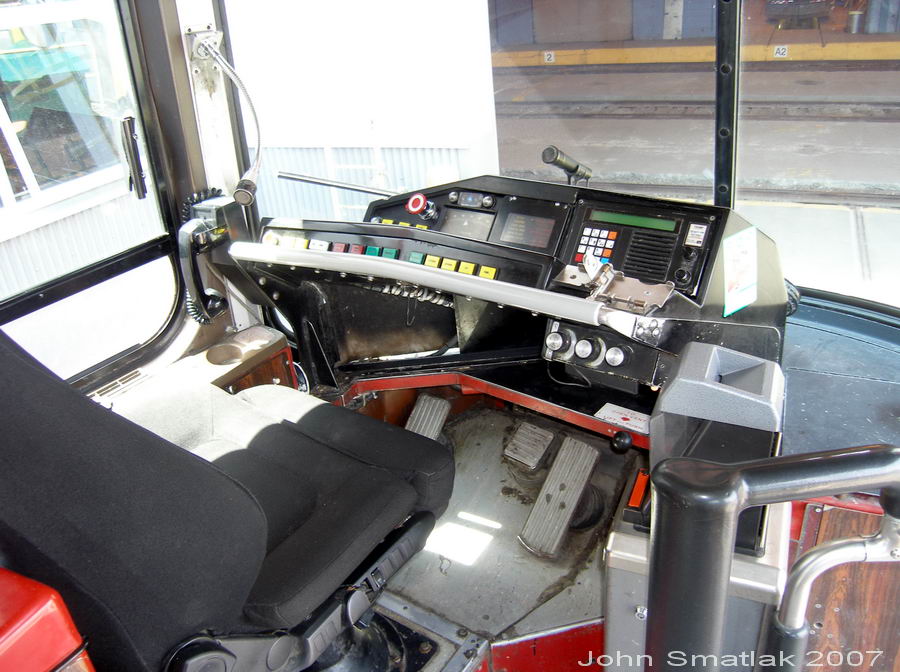
Operator’s position on a CLRV- note foot control, as on the predecessor PCC cars. The new fleet will provide operators with an enclosed cab. |
One |
|
 |
 |
 |
 |
| CLRV Passing the famed Maple Leaf Gardens |
Much |
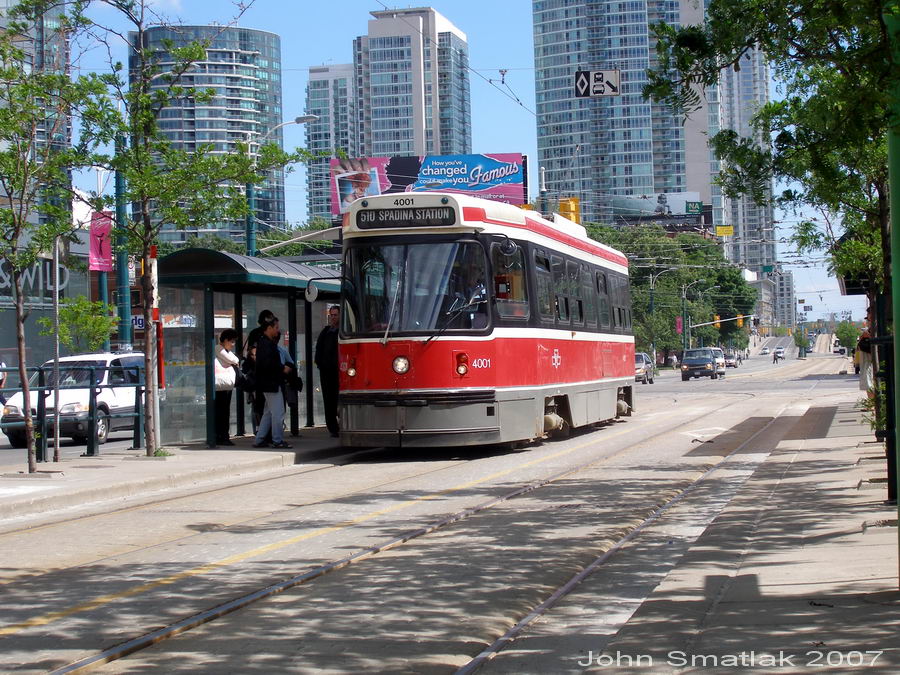
Some lines use “island” platforms between lanes of traffic |
|
 |
 |
 |
 |
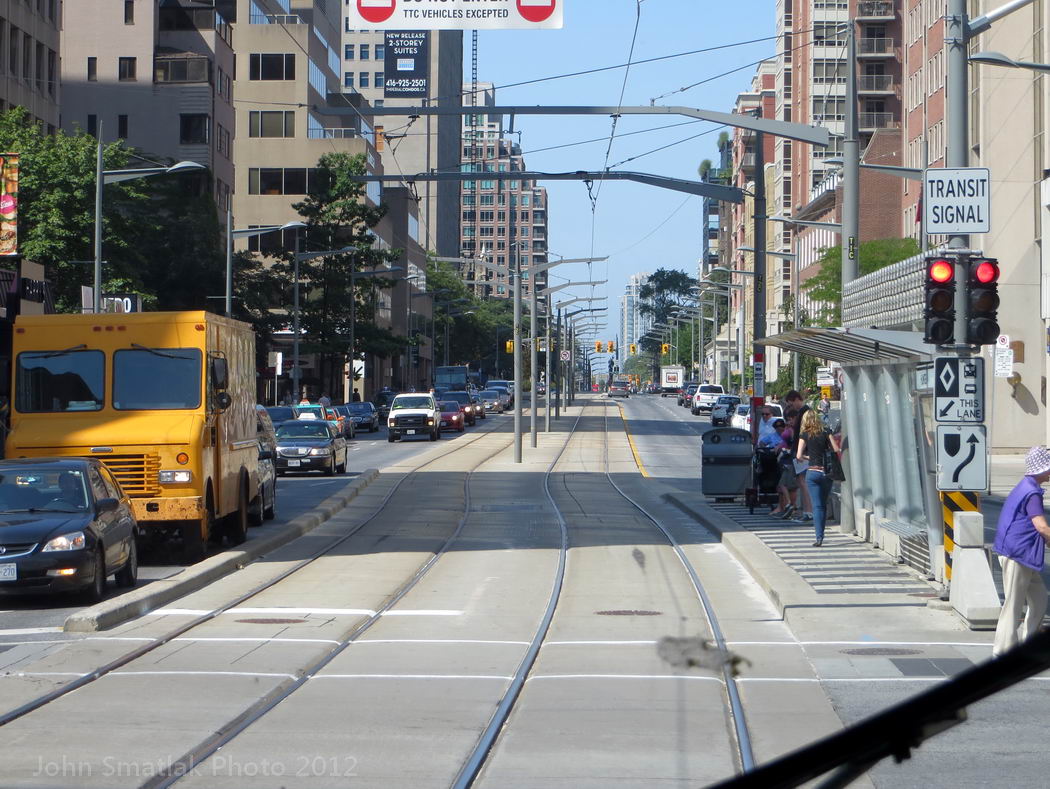
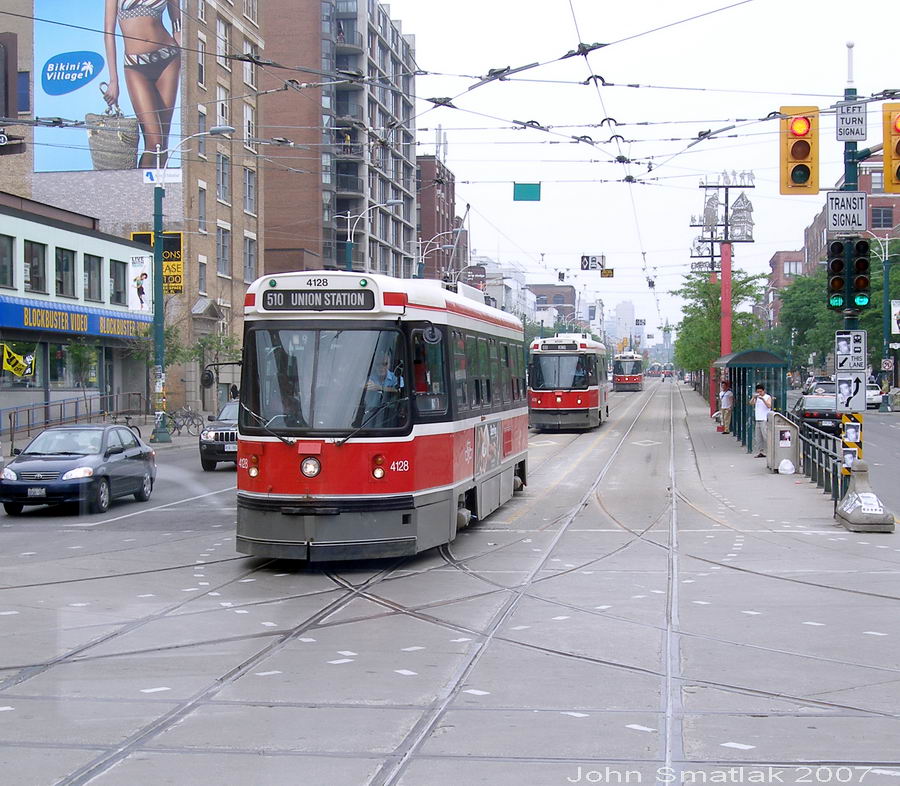
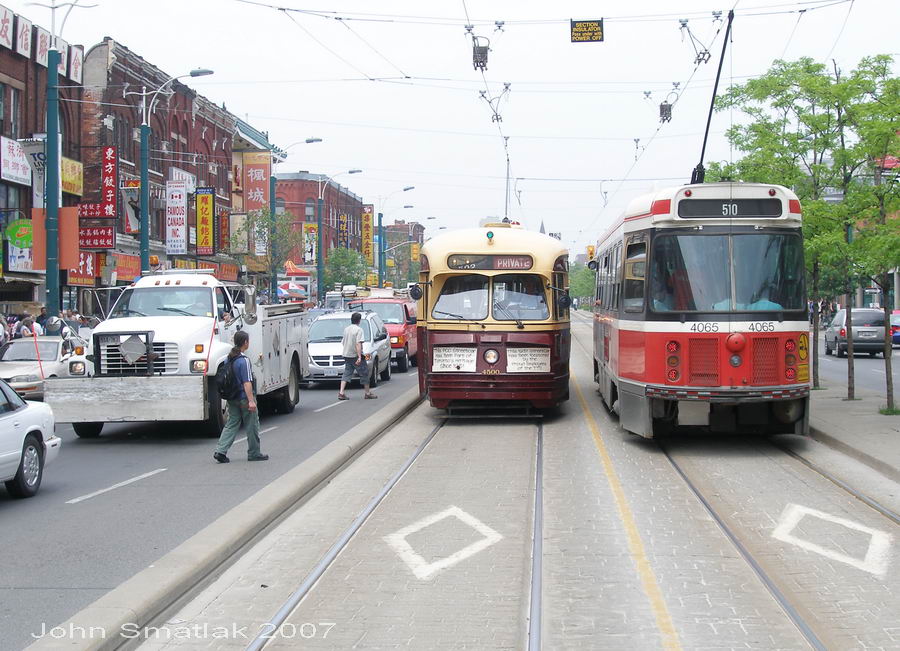
| In addition to operation in mixed traffic, some lines make extensive use of exclusive lanes to help service speed and reliability |
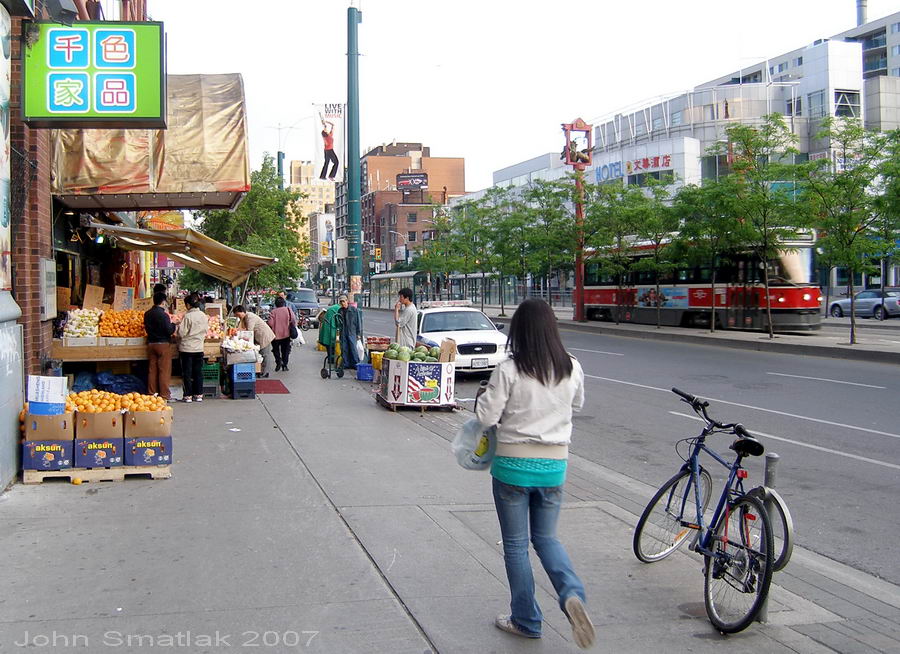
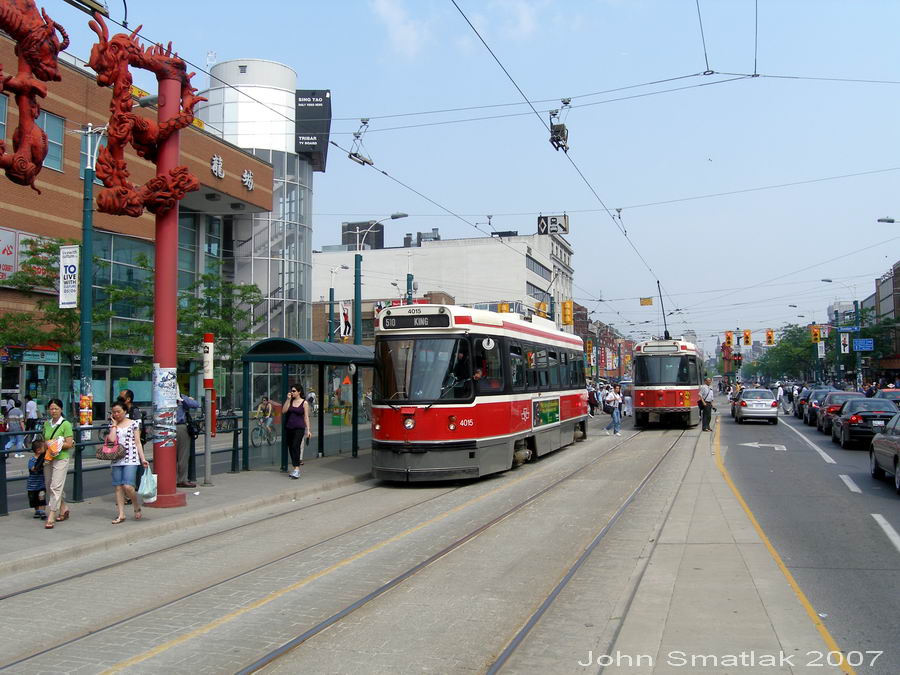
Chinatown scenes along Spadina Avenue |
||
 |
 |
 |
 |
|
Passengers |
Re-opened |
||
 |
 |
 |
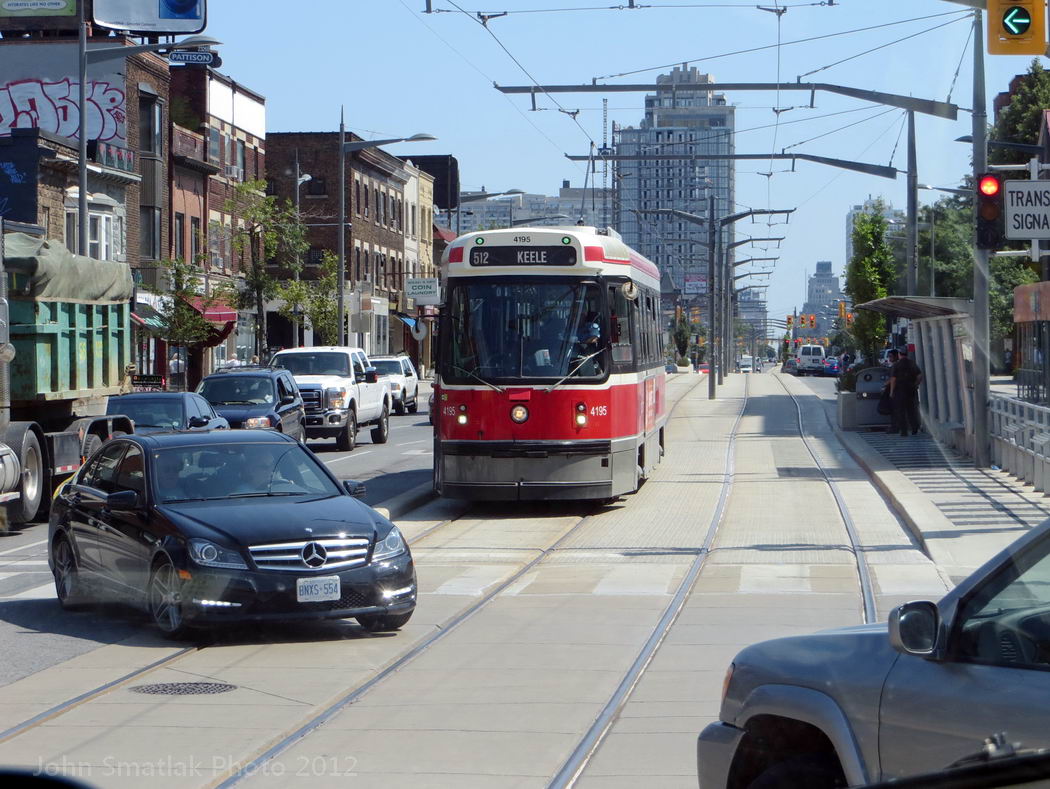 |
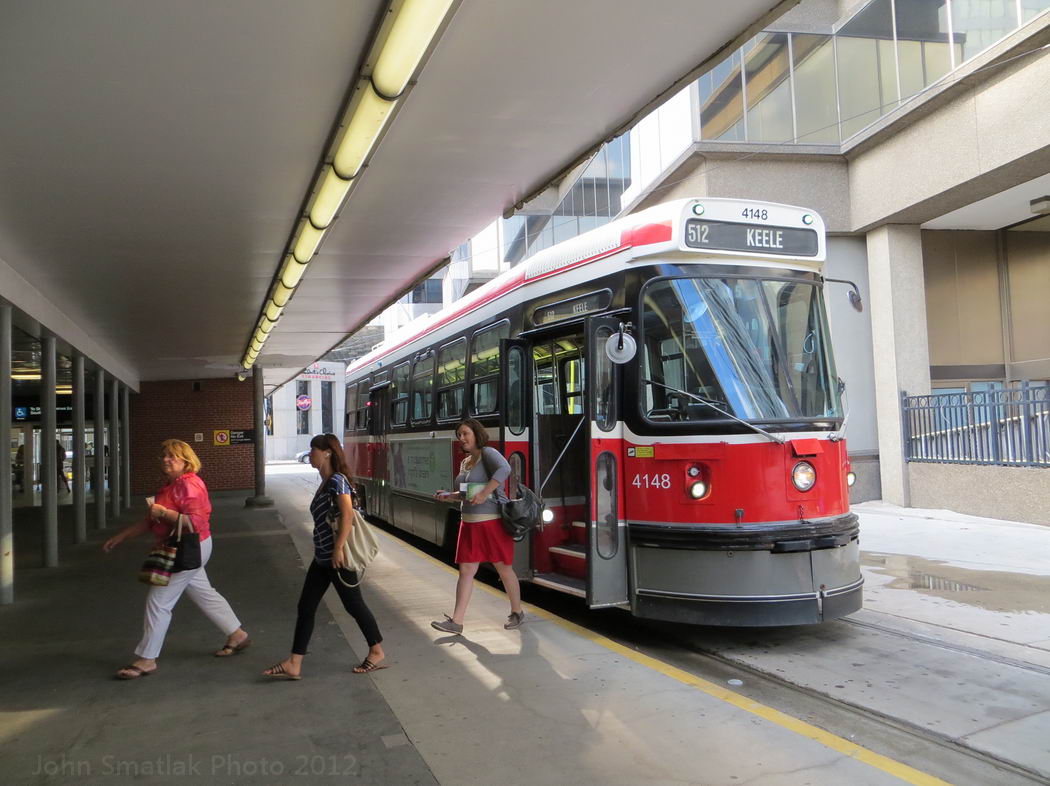
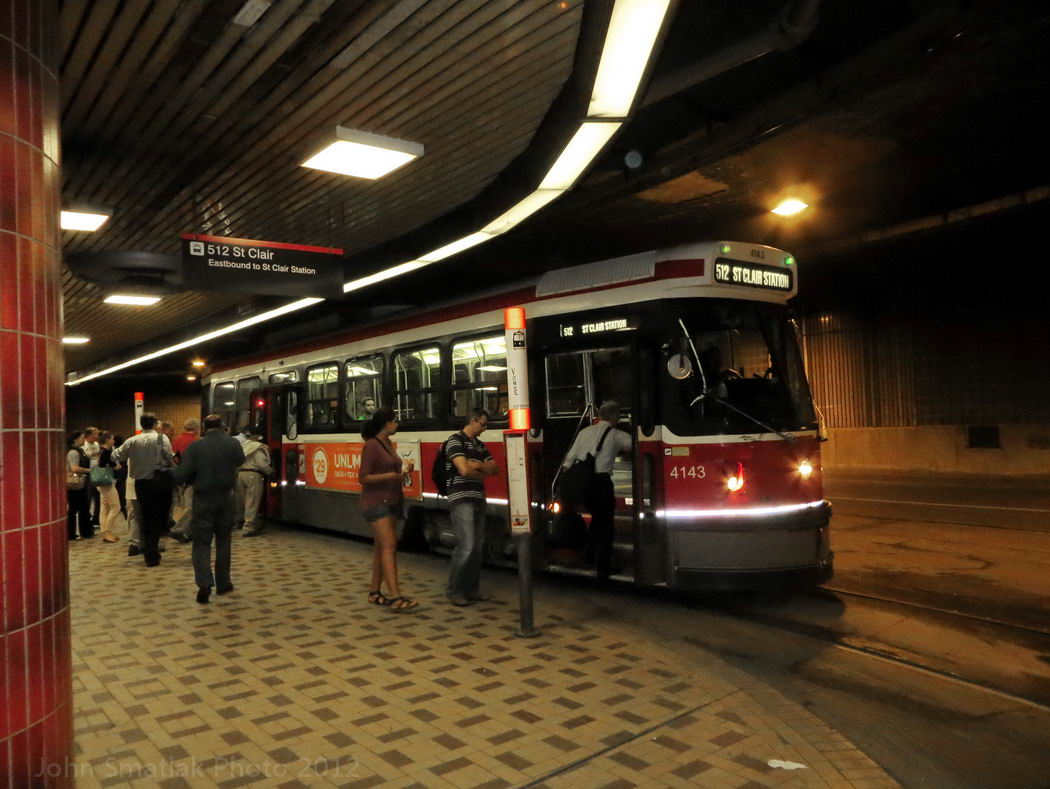
| This underground transit center links the 512 line with a subway station and several bus routes. |
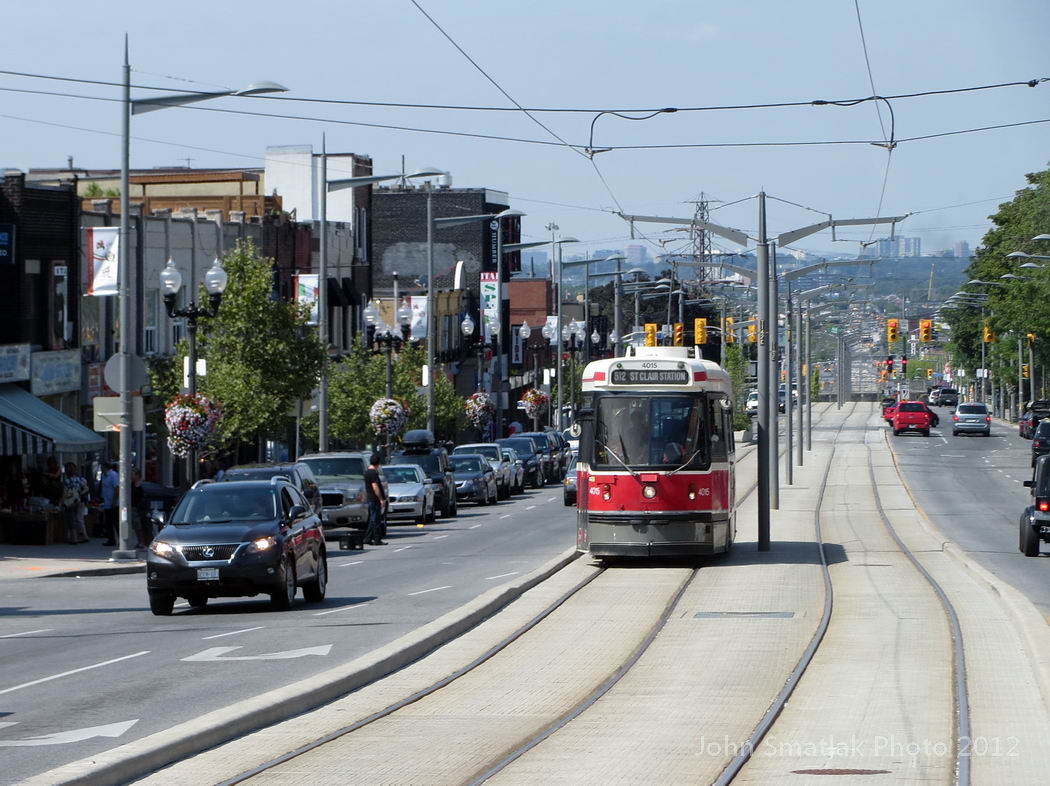
New street lighting and other streetscape improvements were also incorporated. |
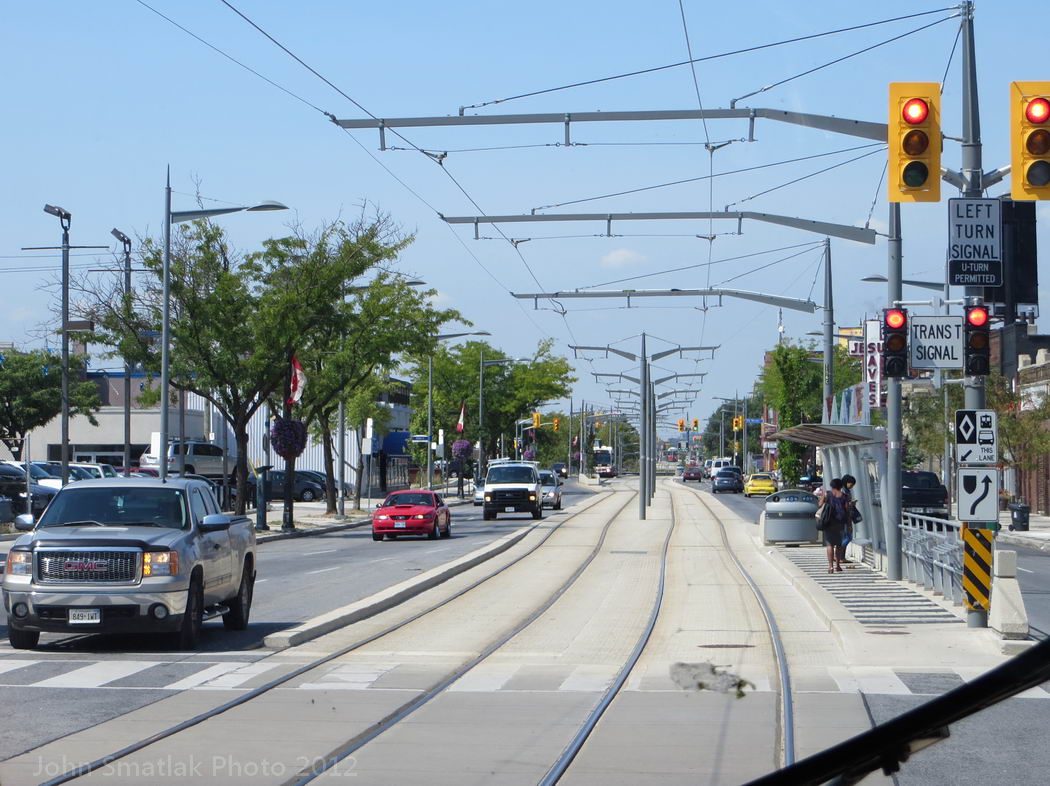
A pair of photos illustrating the left turn phase, permitting turning cars to cross the right-of-way in a controlled fashion. |
|
| |
|||
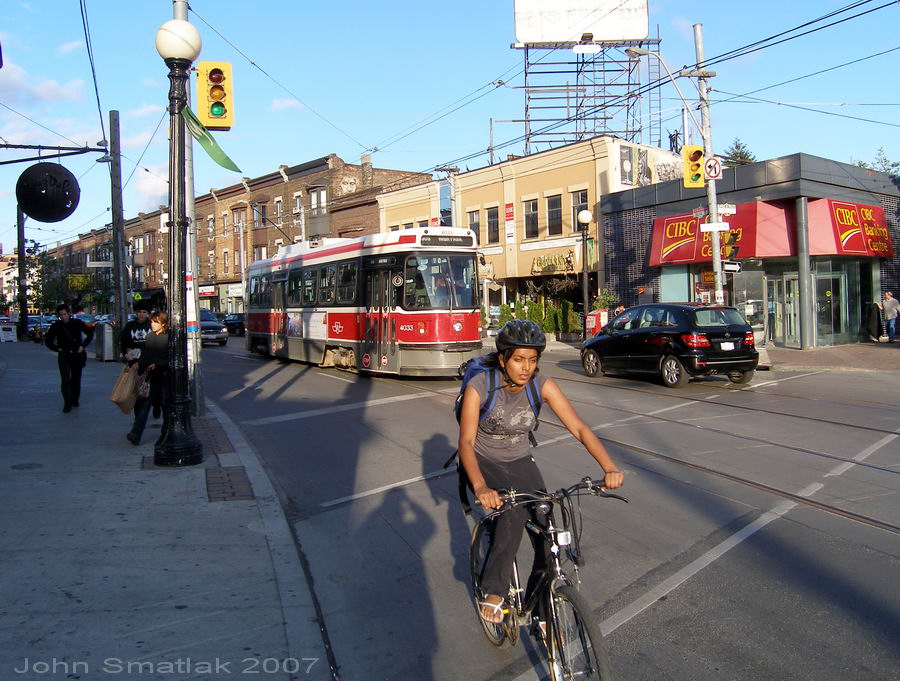 |
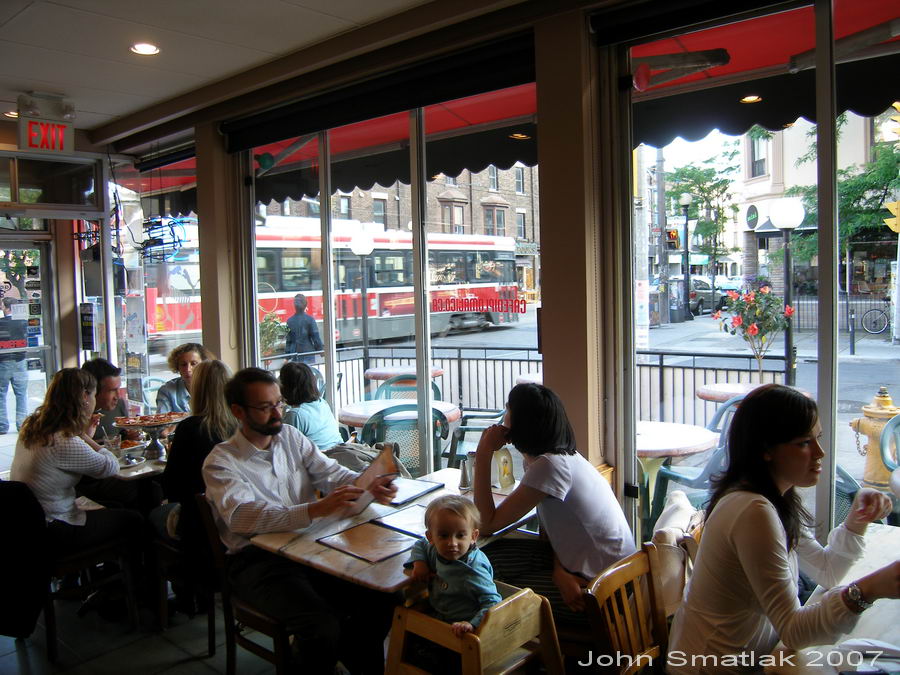 |
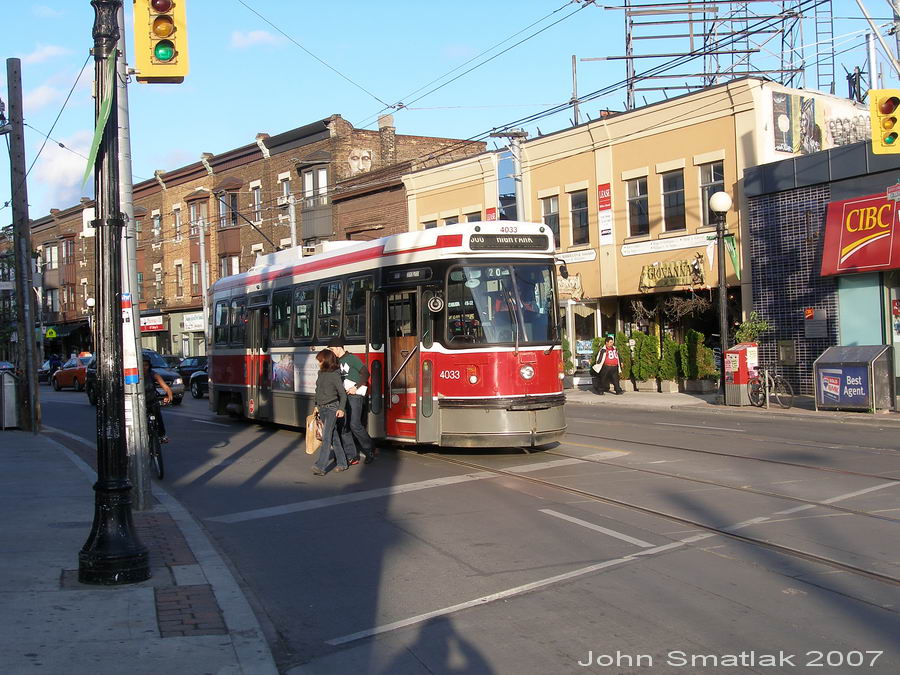 |
 |
|
Along |
Streetcars |
Passengers |
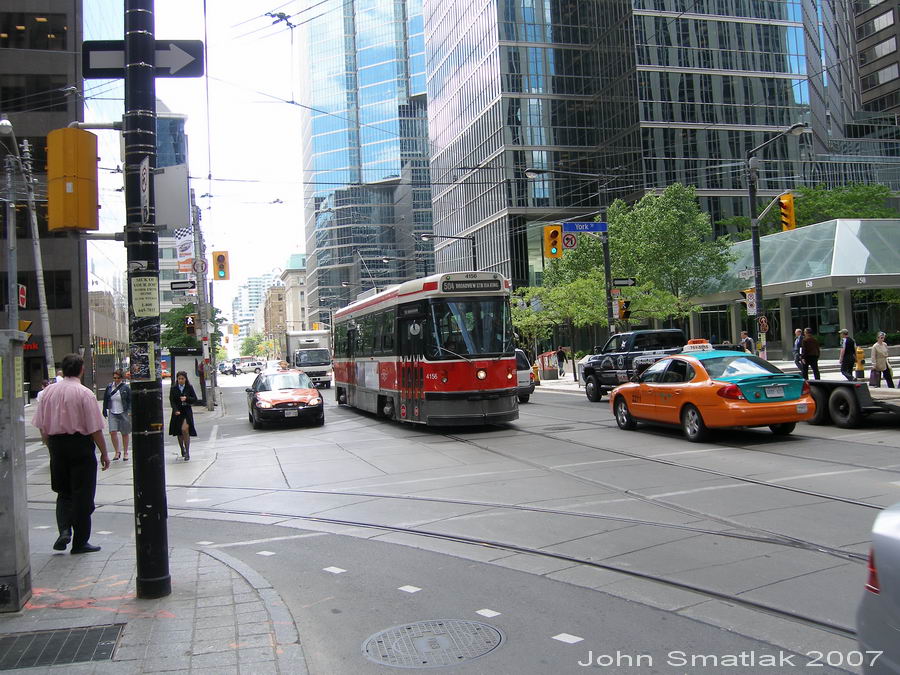
Route 504 crossing York Street |
 |
 |
 |
 |
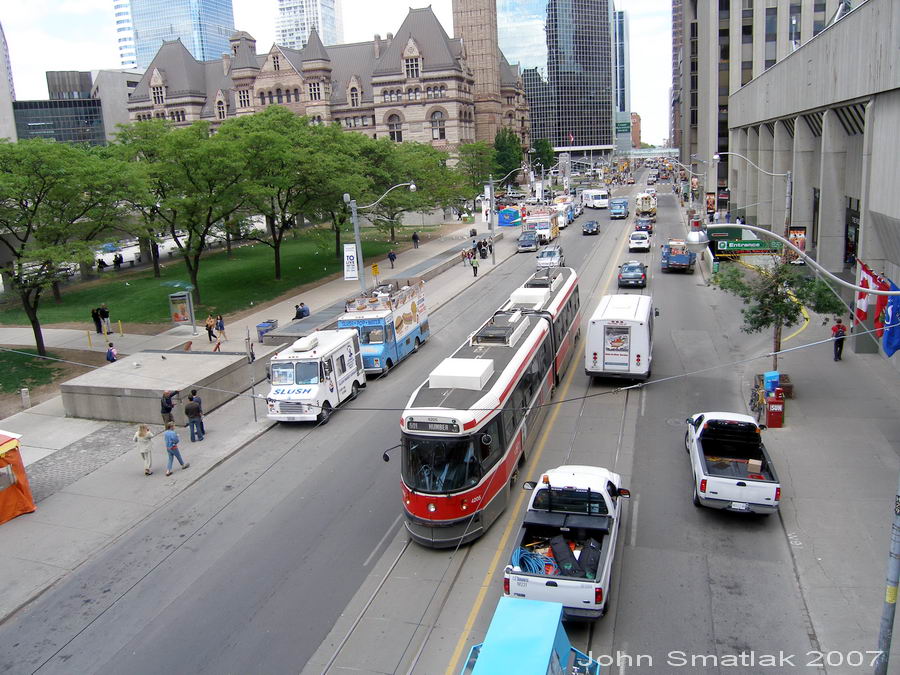
| The beautiful “Old City Hall” building in downtown Toronto |
The ALRV is a 76-foot articulated car |
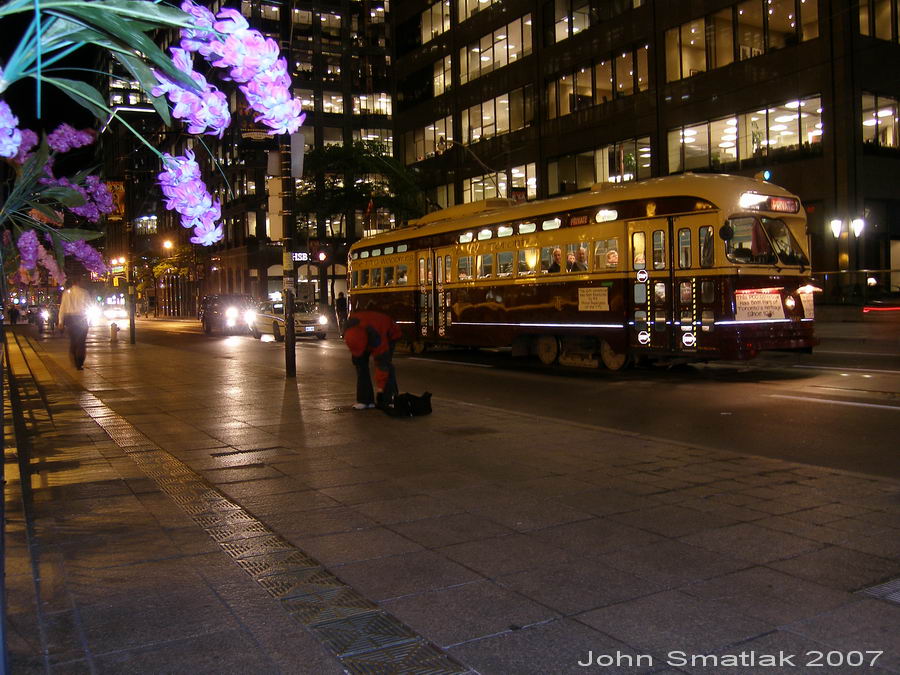
Night |
|
 |
 |
 |
 |
| Scenes along Spadina Avenue |
|||
 |
 |
 |
 |
|
Where |
Bicycles |
Car |
|
 |
 |
 |
 |
|
Turning |
This |
||
 |
 |
 |
 |
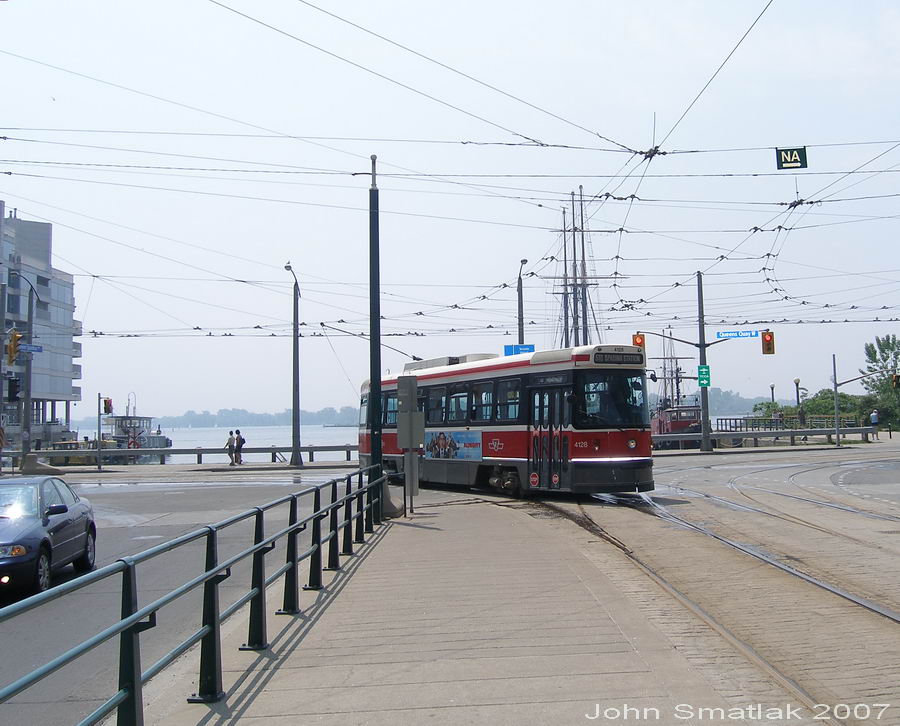
| Segregated right-of-way along Queen’s Quay. This style of median is “mountable” for use by emergency vehicles. |
Waterfront |
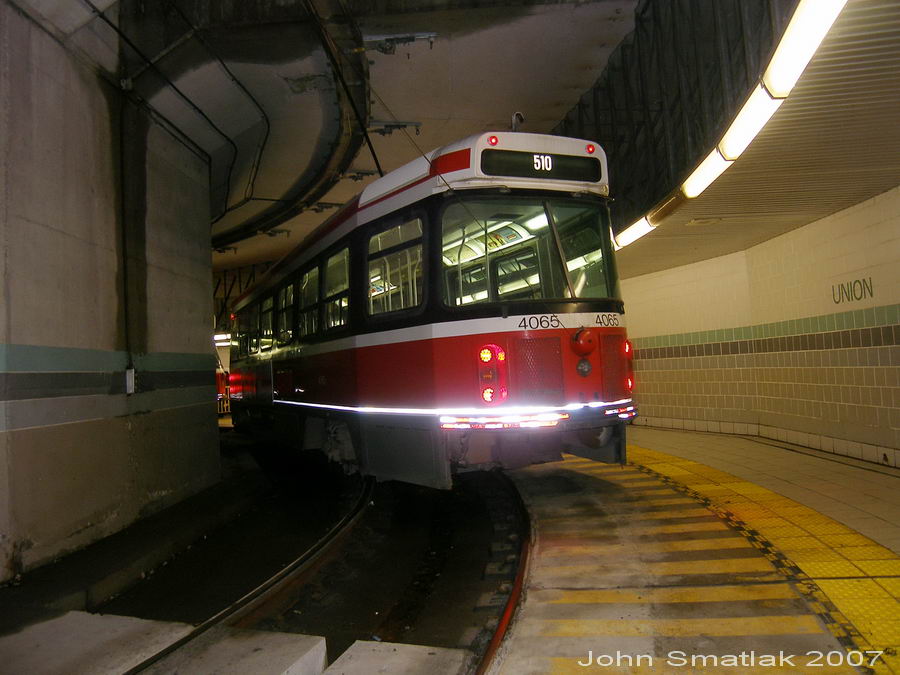
Additions to the streetcar system since 1989 have included a short underground section to connect with the subway system downtown. |
Car |
 |
 |
 |
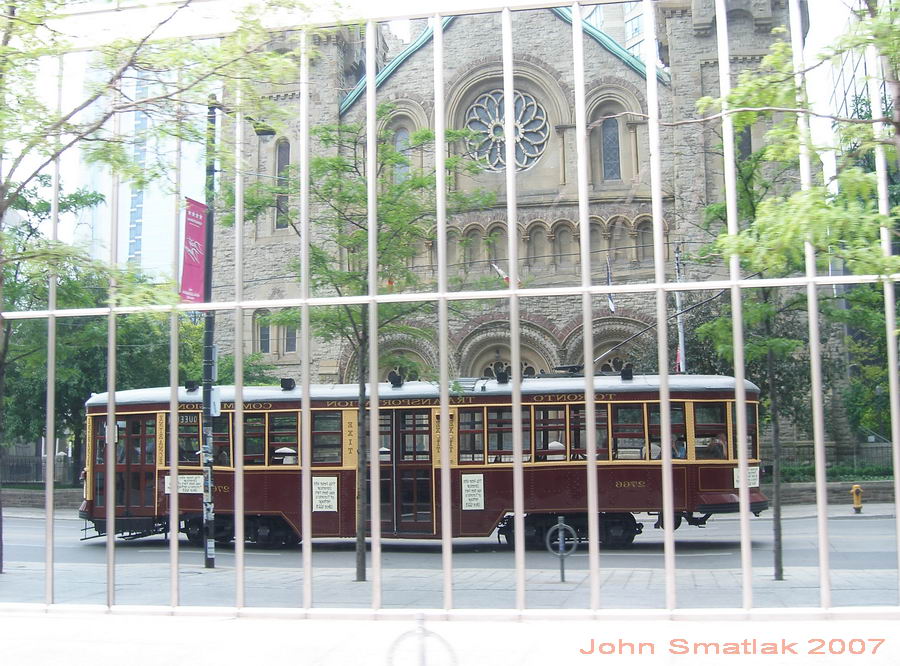 |
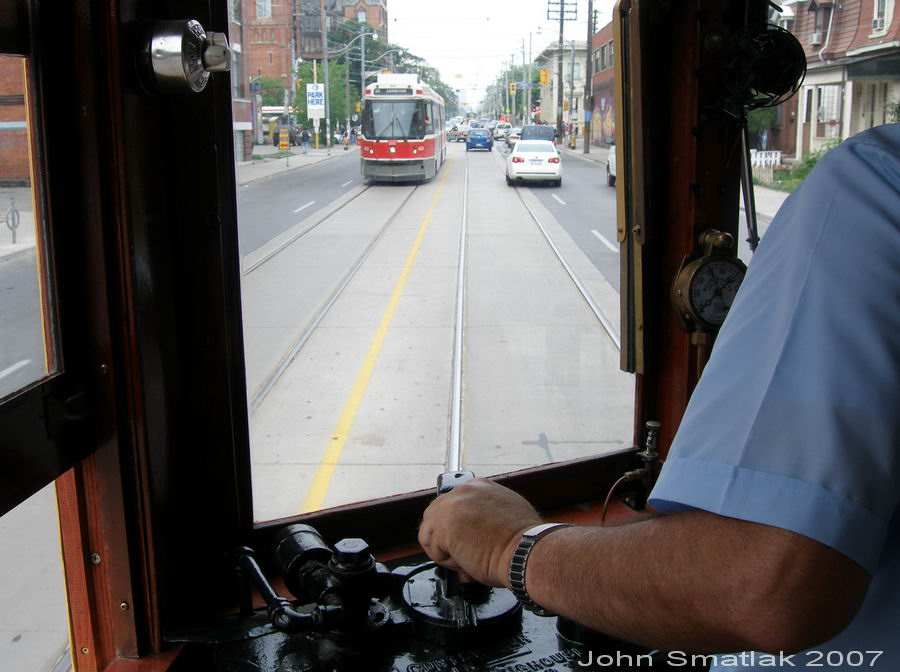
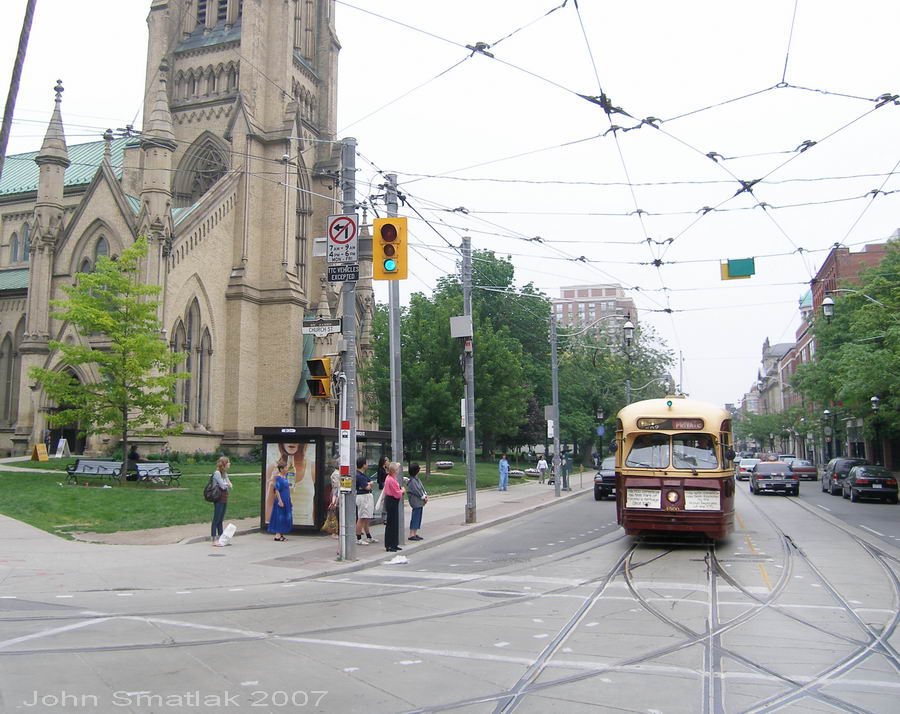
| TTC retains three heritage cars, including this 1923 “Peter Witt” type car. It was brought out for an inspection trip by APTA’s Streetcar & Heritage Trolley Subcommittee during the 2007 Rail Transit Conference |
|||
 |
 |
 |
 |
|
Two |
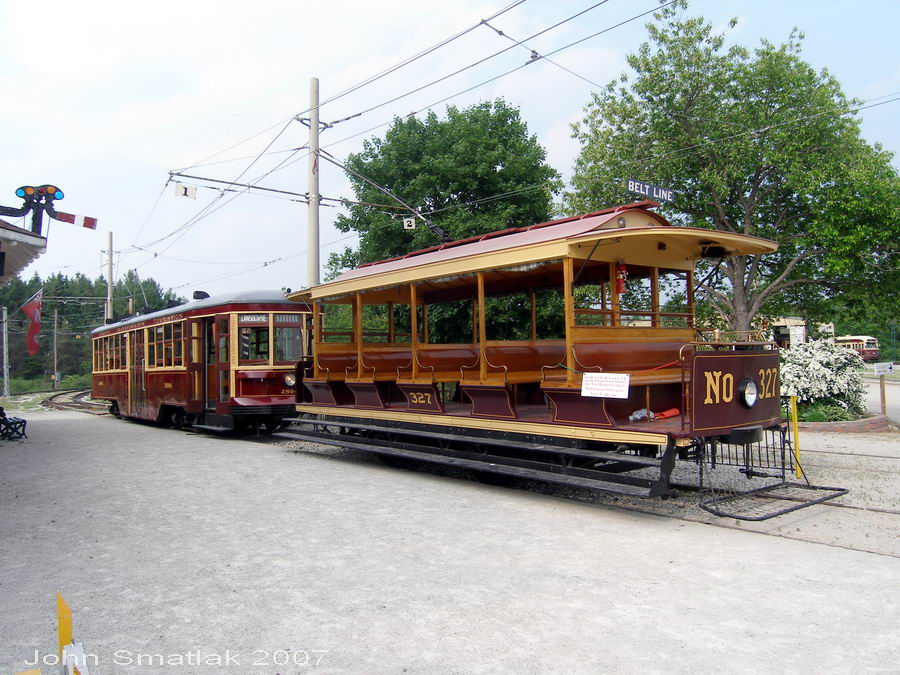
A visit to the Halton County Radial Railway museum outside Toronto offers the visitor a whole world of Toronto transit history |
||
 |
 |
 |
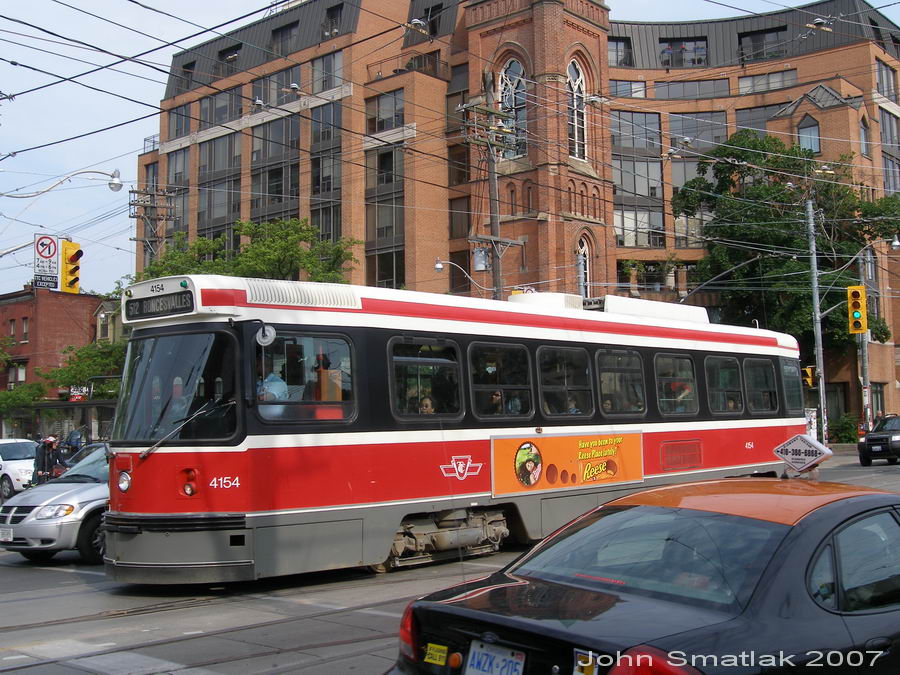 |
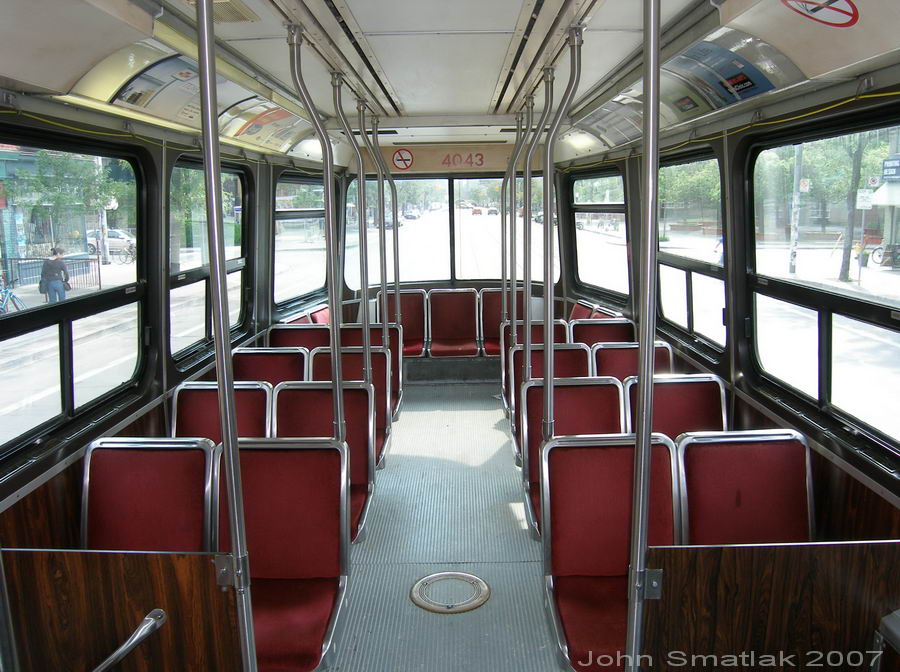
| Interior views of a CLRV |
|||
 |
 |
 |
 |
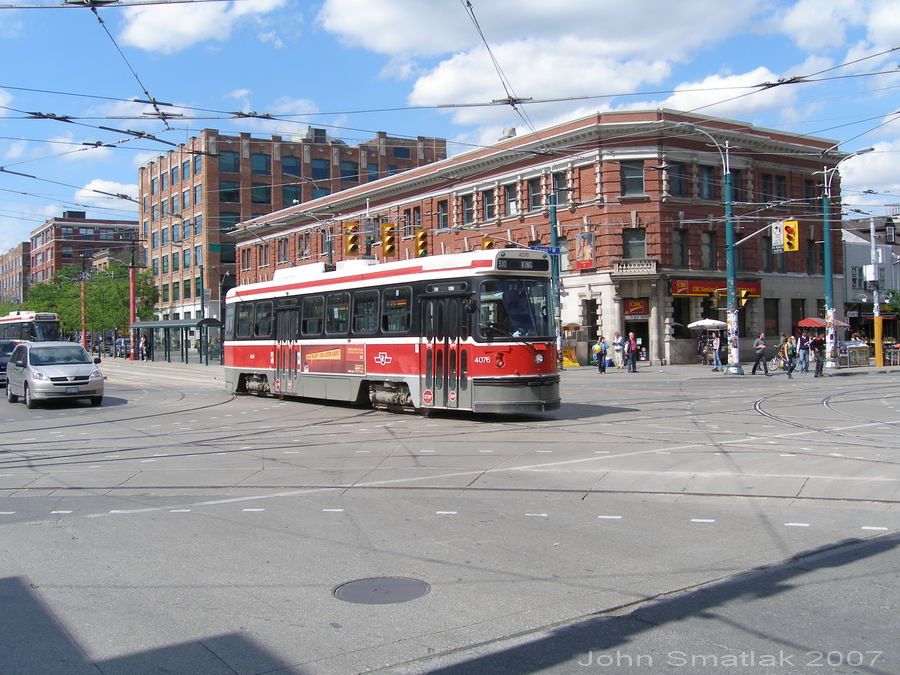
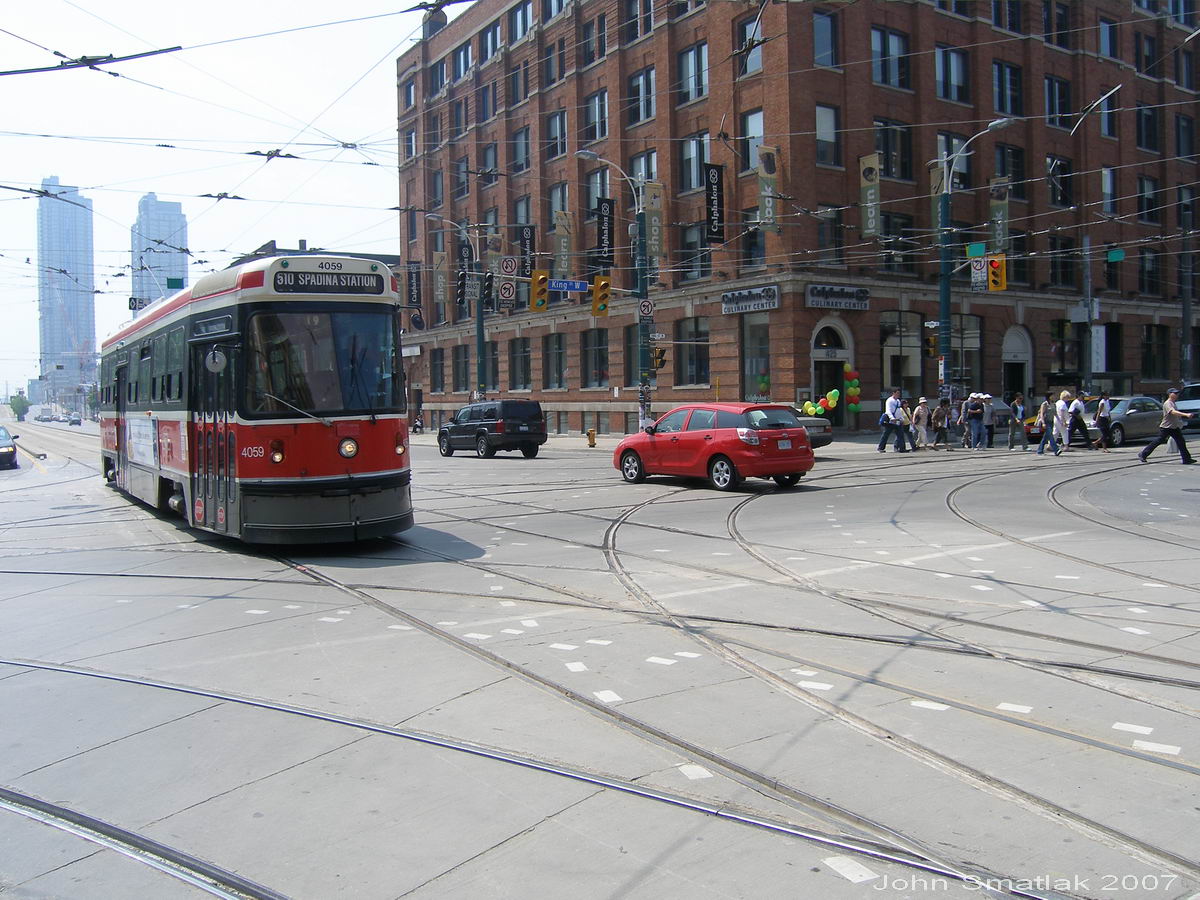
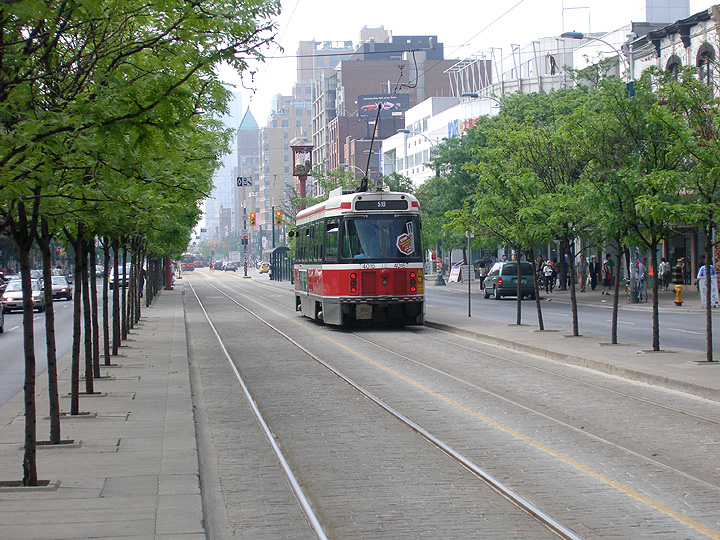
| Scenes at the corner of Spadina and King |
The appearance of the streetcar right-of-way on Spadina has been further enhanced with landscaping |
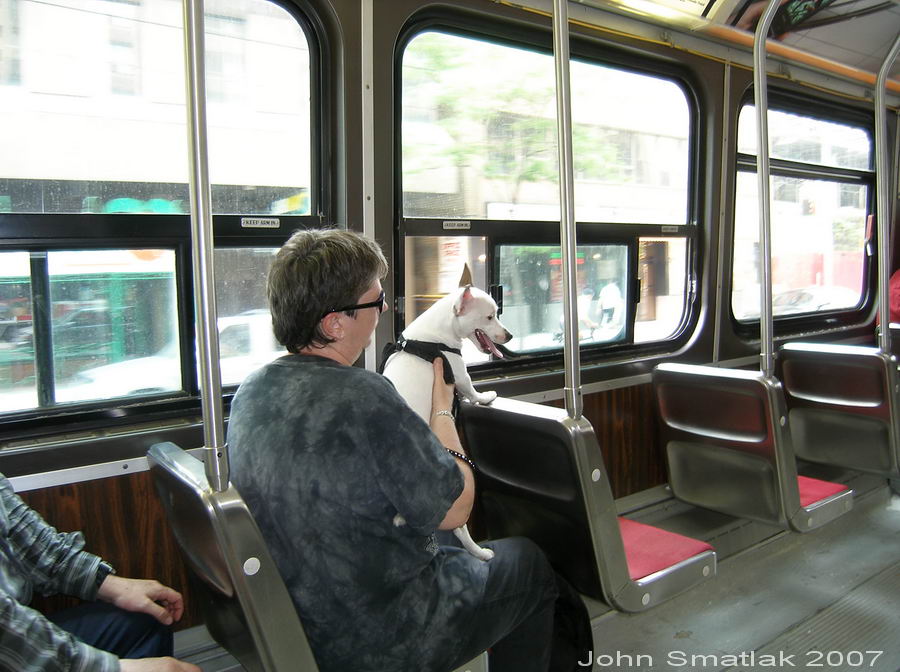
Dog-friendly transit!
|
|
|
John Smatlak Photos |
|||

News / Updates / Links
Bet on your Toronto Raptors at DraftKings! Redeem the DraftKings Sportsbook promo code (click here) for up to $1,000 in free bets! Learn more at AmericanBetting.org.
TTC-“Toronto Meet Your New Ride” website
Halton County Radial Railway (the local trolley museum)