Australian Trams in the USA
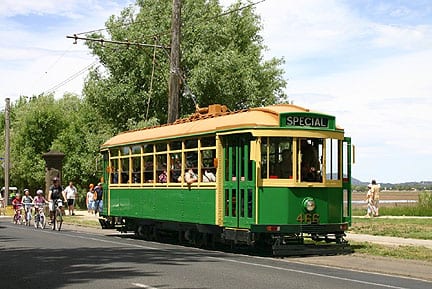
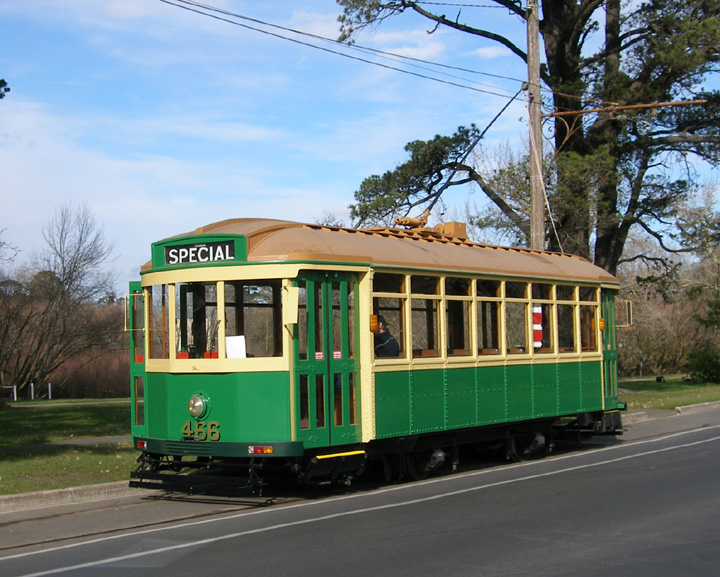
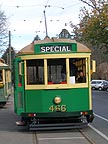
Completely restored X-1 class single truck car
In 2012, there are about 20 Melbourne W-Class trams in operation on US streetcar systems. Another handful exist at various railway museums, and many more have provided parts to facilitate the construction of various U.S. replica and restored cars. The majority of these cars were imported in the late 1970’s and early 1980s.
US cities currently operating Australian “Trams”
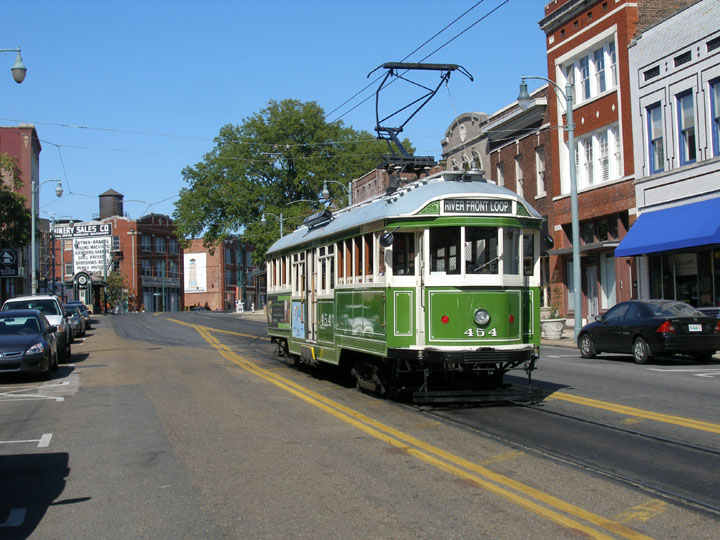
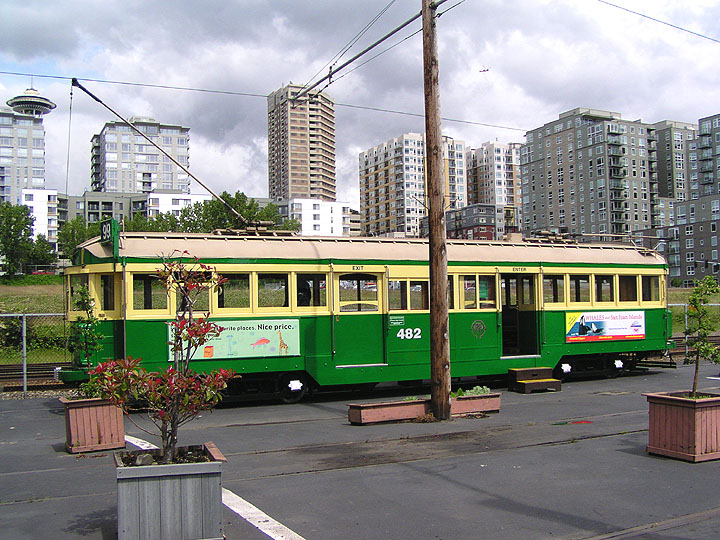
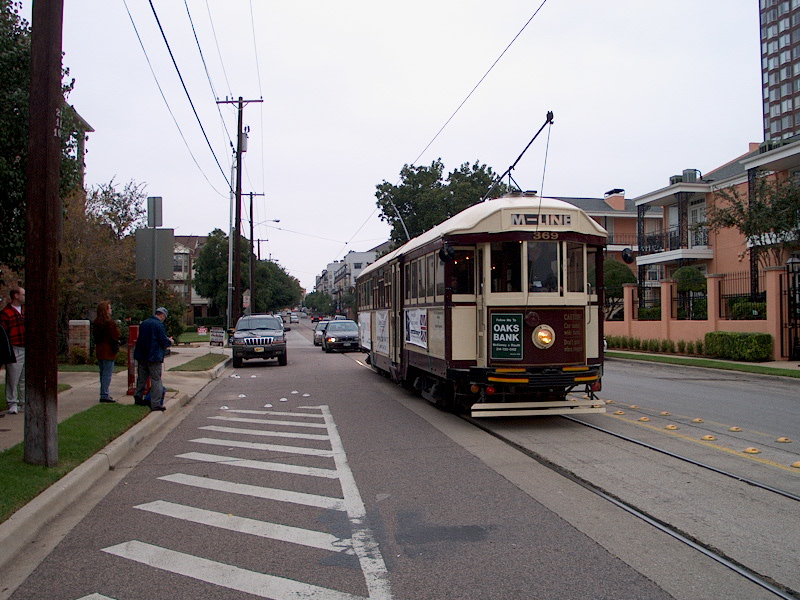
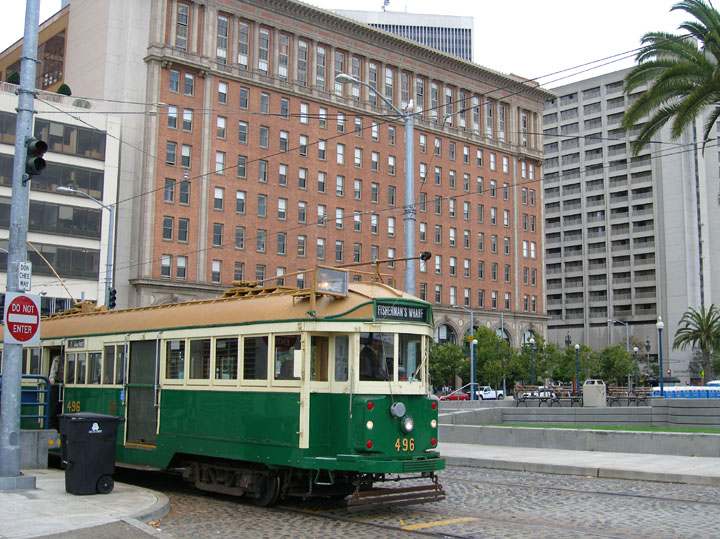
There are presently four U.S. cities operating Melbourne W-Class trams; Memphis, Dallas, San Francisco and Savannah. In addition, San Jose also has one car, and at one time New Orleans operated a group of them on their Riverfront Line (subsequently sold to Memphis). Seattle’s cars ceased operating in 2005, and those cars have been in storage since that time, future uncertain.
Most U.S. operators added doors and folding steps in place of the original open doorways and fixed running boards found on the W-2 cars. In Memphis the cars have also received pantographs in place of trolley poles. San Francisco operate their W’s with a two-person crew, while Savannah, Memphis and Dallas operate with a single person crew (as is the case with the remaining W Class cars in Australia).
Opportunities for additional cars
Large scale exports of Melbourne trams ended in about 1990 when the Victorian government decided it was better to retain its retired heritage trams. Since that time, the tramway system has been privatized and the fleet modernized, although a group of about 50 W-class cars have been retained and updated. An even larger group of W’s is in dead storage pending a decision on disposition. The Council of Tramway Museums of Australasia (COTMA) have worked with the Victorian government to secure a large group of cars and parts for the various tramway museums in Australia and New Zealand, although over one hundred W-class cars remain in storage. In January 2010, incoming Public Transport Minister Martin Pakula announced that the W-Class cars remaining in regular commuter service in Melbourne would be retired in 2012 when new trams arrive to replace them. A smaller group of W’s is to be retained to continue serving the City Circle tourist line. The National Trust of Australia is however lobbying to modify this policy to one that includes a larger group of cars.
Today, opportunities to import trams from Australia are once again available; Newstead Tramcars has three restored single truck cars on offer, and the Bendigo Tramways organization is offering vintage parts, as well as entire trolleys, for sale. Additional cars are expected to become available in Australia in the near future as a decision is made about how many of the more than 200 remaining W-Class cars are to be retained.
The X-1 cars
In 2006, RPR was retained by Newstead Tramcars to evaluate its first restored X-1 car, and prepare a report detailing the car and its suitability for US operation. We were duly impressed with the professional rebuilding performed by Bendigo Tramways, and had the opportunity to operate the car on the heritage system in Ballarat. Having previously gone through the rigorous Victorian Government certification process, the car already meets the majority of the recently established APTA Vintage Trolley equipment criteria. This first car was placed on long term lease to an operator in New Zealand in 2011, but two other cars are available for similar restoration. The Executive Summary from the report appears below. It can also be downloaded along with a copy of the full report via the links below.
|
|
|
|
|
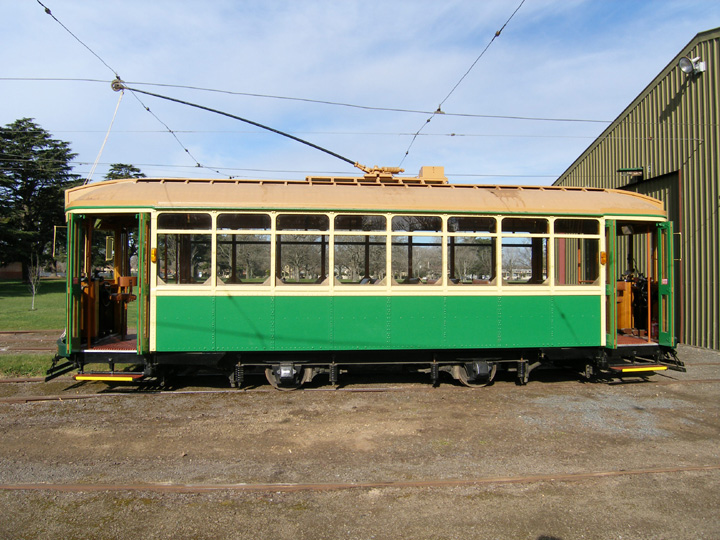
Essentially a single truck version of the classic W-Class tram, the X-1 is based on the popular U.S. Birney streetcar. It differs from the Birney car in having doorways at each corner. |
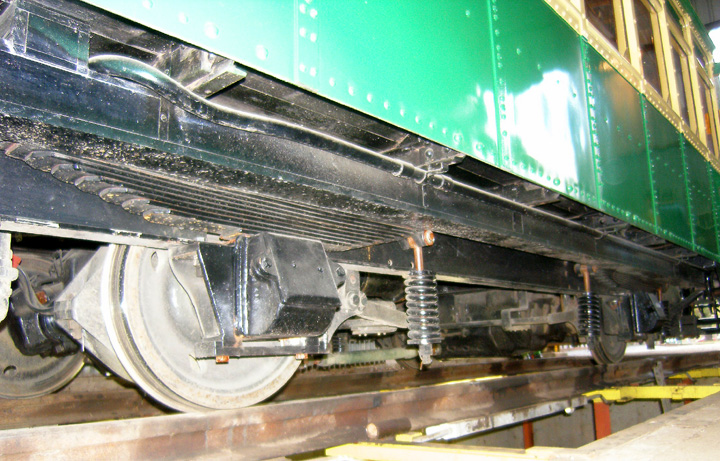
A new fabricated truck was built based on the original plans. Wheelsets and traction motors are identical to the W-Class |
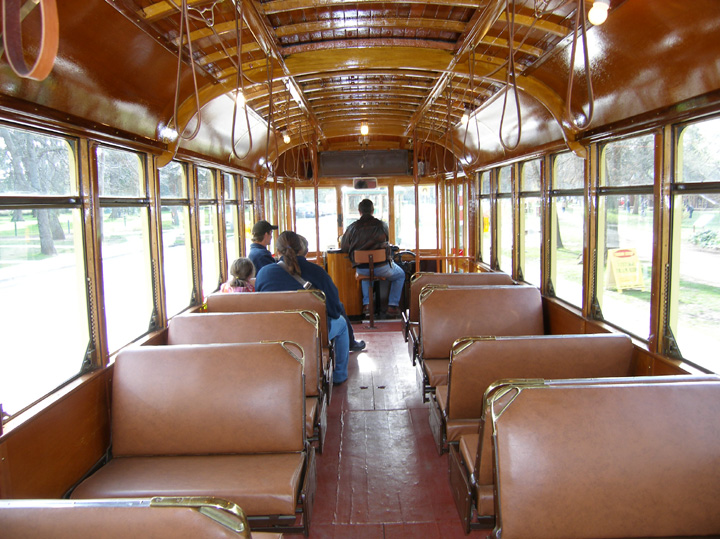
The interior incorporates upholstered walkover-type seats and features beautifully varnished woodwork. |
|
|
John Smatlak photos |
|||
Executive Summary from the X-1 Report
The purpose of this report is to evaluate the condition of Australian trolley car 466 and its general suitability for operation on vintage / heritage trolley systems in the United States . Two identical cars are now awaiting restoration, and it is desired to verify the appropriateness of various features and modifications prior to commencing restoration work on these additional cars. The author inspected Car 466 during a trip to Australia in July 2006, and had the opportunity to operate the car on the trolley system in Ballarat. The author also visited many parts of the Melbourne Tramways system where the car originally operated to gain an understanding of local conditions. The author also discussed Car 466, as well as relevant Australian trolley regulations and accreditation processes, with leading independent Australian trolley experts. Accreditation documentation covering the car’s approval for operation on the Bendigo and Ballarat heritage tramway systems was also reviewed.
The car is essentially an Australian version of the standard U.S. single truck “Birney” type car, the primary difference being a somewhat more robust steel frame, and doorways at each corner. The majority of the car’s mechanical components are refurbished vintage equipment, and all major systems use service-proven apparatus sourced primarily from Melbourne W-class trolleys.
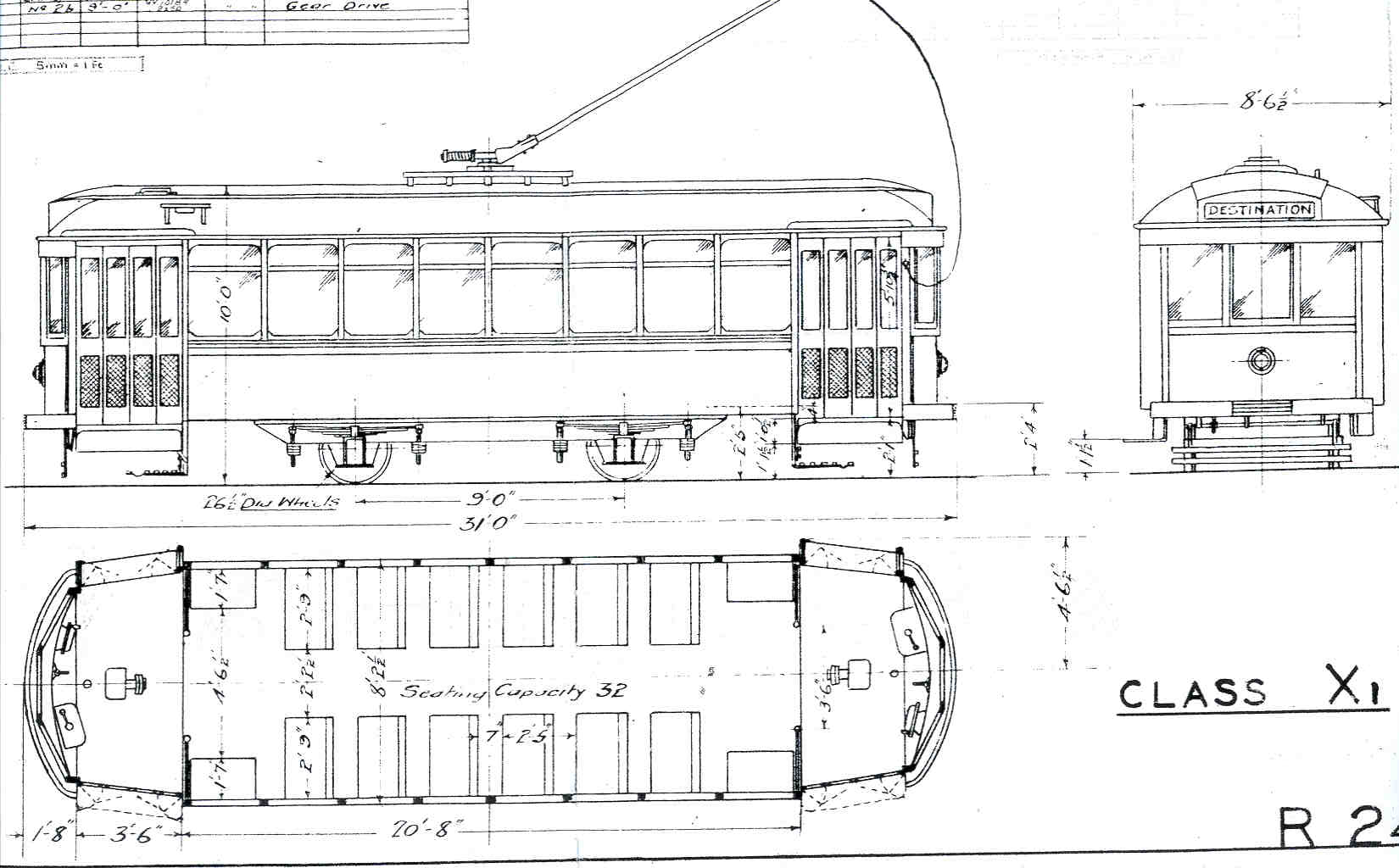
Trolley car 466 is a 31 foot long, single-truck, double-ended, arch roof, straight side, steel bodied, city-service trolley originally built in Melbourne, Australia in 1926. The car is configured with a shallow drop-platform arrangement, providing doorways and folding doors/steps on both sides of each platform. There are no interior partitions or full bulkheads, and consequently the car is well suited for tourist type service where passenger views are important. The car was designed for single person operation, and accommodates 32 seated passengers in upholstered seats, and has room for 32 standees. Top speed is approximately 30 mph.
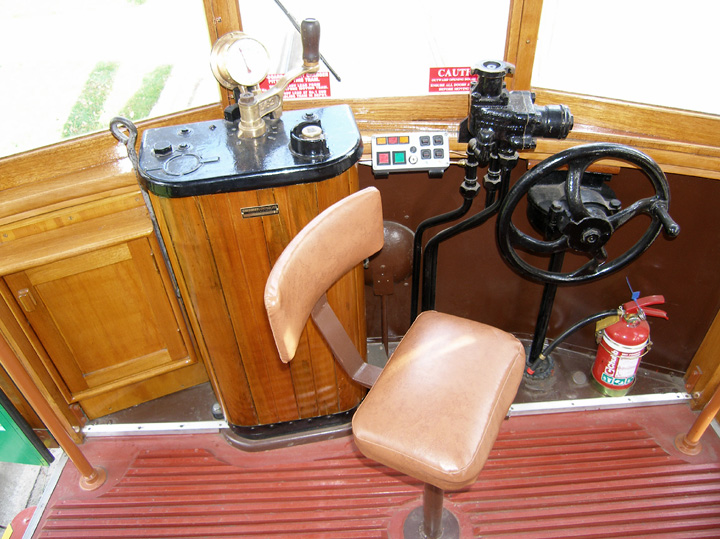
The car utilizes 600 volt K-type switched resistor control, equipped with a relatively late-model K controller and a line switch. Current collection is via a single trolley pole, and the car is not currently fitted with a trolley catcher. The car has a straight-air type airbrake system controlled with self-lapping motorman’s brake valves. A relay valve is incorporated into the system to speed brake application and release. Operator’s controls are identical at both ends. Operational control and handling were also found to be excellent, and the car rides well for a single truck car.
The car has been professionally restored throughout, and presents an excellent appearance. The restoration work was performed under contract by Bendigo Tramways. Bendigo Tramways is a well-established operation and offers appropriately skilled staff and facilities for both restoration and operational testing. This close association with Bendigo Tramways also facilitates Newstead Tramcar’s ability to supply any needed spare parts. The car’s restoration also took advantage of several modern products to provide flexible door controls and interlocks, as well as LED flashers, turn signals and stop lights appropriate for in-street operation.
Being a single truck high-floor car, ADA access is probably best provided using platform-based lifts. The car’s front doorways open up to just over 33 inches, meeting the minimum requirement for wheelchair access. Access to the car’s platforms can thus be achieved with some minor modifications (primarily the provision of a smooth floor surface). Access could be further enhanced by modifying the car’s platforms to eliminate the 4 inch interior step up into the passenger compartment. This would provide a level floor throughout the vehicle. Newstead Tramcars advise that they are willing to quote this work as an option.
The report also provides a detailed evaluation of the car against the recently released APTA “Heritage Trolley Vehicle Equipment Standard”. Although local conditions must always be evaluated to determine the suitability of any piece of rolling stock to a particular operation, we can note that Car 466 has already been fitted with the majority of the necessary equipment required by the new Standard, and in our opinion can easily be retrofitted to achieve full compliance. The car had previously been certified by the Victorian Government Department of Infrastructure standards for operation in city streets in Australia . Newstead Tramcars advises that they are “keen to assist purchasers with any and all equipment needed to make the cars APTA compliant”, and are able to provide quotes for any equipment needed to adapt the cars to a particular US operation.
In summary, Car 466 is a professionally restored trolley that can quickly be ready for operation on a US Heritage Trolley system. With a total of three cars of the same type available, it could provide an excellent start-up fleet for a new operator, or enhance an existing fleet.
-RPR, October 2006
|
|
|
|
|
X-1 Class drawing 
|
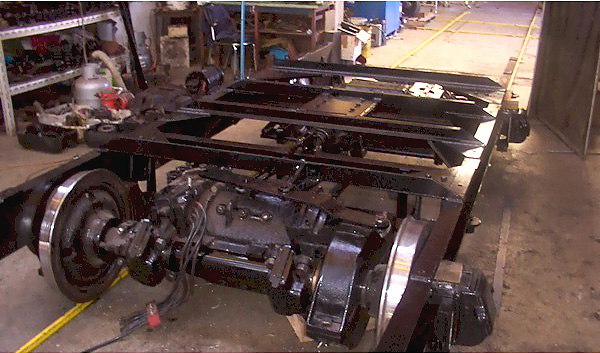
New truck prior to installation under car | Operator’s control position | |
|
|
|||
Click (2.7 |
|||